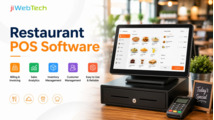
A Restaurant POS System is the central technology that enables restaurants to manage billing, orders, payments, inventory, and customer data from a single platform. According to industry research reports, the global POS market is expected to surpass $44.6 billion by 2026, driven largely by hospitality and food service businesses.
Today’s Modern POS Systems for Restaurants go far beyond processing transactions. They integrate ordering, kitchen communication, staff management, inventory tracking, customer loyalty programs, analytics, and even AI-driven insights. Whether it’s a small cafe, quick-service restaurant, food truck, or multi-location enterprise, adopting the right Restaurant Management POS can directly impact revenue, efficiency, and customer satisfaction.
With the rise of digital payments, food delivery platforms, and online ordering, restaurants are increasingly adopting Cloud-Based Restaurant POS and AI-Powered Restaurant POS systems to stay competitive in a fast-changing market.
Key Highlights
- Restaurant POS systems streamline billing, inventory, staff management, and reporting in one unified platform.
- Cloud-based POS enables real-time access, remote monitoring, and easier multi-location management.
- Automation reduces errors, controls costs, and improves overall operational efficiency.
- Proper training and system integrations enhance performance and maximize ROI.
- A scalable and secure POS system supports long-term growth and future expansion.
Working of Restaurant PoS Systems
Understanding the working of a Restaurant POS System is essential for restaurant owners who want to optimize operations, improve service speed, and increase profitability. In Restaurant POS Systems 2026, the system is no longer limited to billing - it acts as the central nervous system of the entire restaurant. From order placement to inventory updates and real-time analytics, every activity flows through the POS platform. Let’s explore in detail how a modern Restaurant Point of Sale System functions step by step.
1. Order Entry and Processing
The process begins when a customer places an order. This can happen in multiple ways - at the counter, at the table through a server, via self-service kiosks, or through online ordering platforms.
In a Mobile POS for Restaurants, servers use tablets or handheld devices to take orders directly at the table. The order is instantly entered into the system without needing to walk back to a fixed terminal. This reduces wait time and minimizes manual errors.
Once the order is entered, the POS software automatically categorizes items, applies modifiers (such as extra toppings or special instructions), and calculates pricing in real time.
2. Kitchen Communication and Workflow Management
After order entry, the system sends the information directly to the kitchen display system (KDS) or kitchen printer. In Modern POS Systems for Restaurants, this process is completely automated.
The kitchen receives:
- Order details
- Special instructions
- Table number or delivery details
- Time stamp
This seamless communication reduces confusion between front-of-house and back-of-house staff. For busy restaurants, this improves coordination and speeds up service significantly. Advanced AI-Powered Restaurant POS systems can even prioritize orders based on preparation time and workload distribution.
3. Real-Time Billing and Payment Processing
The Restaurant Billing System automatically calculates totals, taxes, discounts, and service charges. Whether customers split bills or combine orders, the system handles it efficiently.
In Contactless Payment POS 2026, restaurants support multiple payment methods such as:
- Credit and debit cards
- NFC tap-to-pay
- QR code payments
- Mobile wallets
- Online payment gateways
The integration of secure payment processing ensures faster checkout and improved customer satisfaction. Cloud-based systems also synchronize transactions instantly, ensuring accurate financial reporting.
4. Inventory Management and Stock Control
One of the most powerful aspects of POS Software for Restaurants is automated inventory tracking. Every time a dish is sold, the system deducts the required ingredients from stock levels.
For example, if a burger is sold, the POS deducts buns, patties, cheese, and other components automatically. This real-time tracking helps prevent shortages and overstocking. In Cloud-Based Restaurant POS systems, inventory data is updated instantly across multiple outlets. Managers can monitor stock levels remotely and receive low-stock alerts.
5. Data Collection and Analytics
A key feature of Restaurant Management POS systems is advanced data reporting. Every transaction generates valuable insights.
The system collects data such as:
- Daily and monthly sales
- Peak business hours
- Best-selling menu items
- Employee performance
- Customer purchase patterns
With Smart Restaurant POS Systems, restaurant owners can analyze trends and adjust pricing, menu offerings, or staffing accordingly.
AI-driven analytics can even forecast demand based on historical sales data, helping reduce waste and improve profitability.
Key features of Restaurant PoS Systems
In Restaurant POS Systems 2026, technology has evolved far beyond simple billing. Today’s Modern POS Systems for Restaurants serve as comprehensive operational hubs that streamline workflows, improve customer experience, and provide real-time business insights. Whether you run a café, fine-dining restaurant, or multi-location chain, choosing the right Restaurant POS System means understanding the key features that drive efficiency and profitability.
Below are the most important features every restaurant should look for when selecting the Best Restaurant POS System.
1. Order Management System
A core feature of any Restaurant Point of Sale System is seamless order management. The system allows staff to quickly input orders, modify items, apply special instructions, and send them directly to the kitchen.
Advanced systems support:
- Dine-in, takeaway, and delivery orders
- Table mapping and seat management
- Split bills and group payments
- Custom modifiers (extra toppings, dietary preferences)
In Mobile POS for Restaurants, servers can take orders directly at the table using handheld devices, reducing delays and errors.
2. Cloud-Based Accessibility
A Cloud-Based Restaurant POS allows restaurant owners and managers to access business data from anywhere. Cloud technology ensures automatic updates, secure backups, and real-time synchronization across devices and locations.
This feature is particularly valuable for multi-location businesses that require centralized control and remote monitoring.
3. Integrated Payment Processing
Modern Restaurant Billing Systems support multiple payment methods, including:
- Credit and debit cards
- Contactless NFC payments
- QR code payments
- Digital wallets
- Online payment gateways
With the rise of Contactless Payment POS 2026, secure and fast payment processing has become a necessity. Integrated payment systems reduce checkout time and improve customer satisfaction.
4. Inventory Management
One of the most powerful features of POS Software for Restaurants is automated inventory tracking. The system deducts ingredients or items in real time as sales occur.
Key inventory features include:
- Stock level monitoring
- Low inventory alerts
- Supplier management
- Waste tracking
- Automated purchase orders
This helps restaurants minimize food waste and control operational costs.
5. AI-Powered Analytics
An AI-Powered Restaurant POS uses data analytics to generate actionable insights. Managers can access reports on sales trends, peak hours, best-selling items, and employee performance. Smart analytics enable:
- Demand forecasting
- Menu performance analysis
- Revenue tracking
- Profit margin evaluation
These insights help restaurants make data-driven decisions to increase profitability.
Key Benefits of Restaurant PoS Systems
In 2026, adopting a Restaurant POS System is no longer just about replacing traditional cash registers - it’s about transforming the entire restaurant operation. From improving service speed to enhancing profitability, Restaurant POS Systems 2026 provide measurable advantages for restaurants of all sizes. Whether you operate a small café or manage multiple outlets, the right Restaurant Management POS can significantly elevate your business performance. Below is a detailed look at the key benefits of implementing modern POS Software for Restaurants.
1. Improved Operational Efficiency
One of the biggest benefits of a Restaurant Point of Sale System is streamlined workflow management. Orders are instantly transmitted from the front-of-house staff to the kitchen, reducing miscommunication and manual errors.
With Mobile POS for Restaurants, servers can take orders directly at the table and send them to the kitchen in real time. This eliminates delays, speeds up service, and increases table turnover rates - especially during peak hours.
Automation reduces repetitive manual tasks, allowing staff to focus more on customer service rather than paperwork.
2. Faster and More Accurate Billing
A modern Restaurant Billing System calculates totals, taxes, discounts, and service charges instantly. This reduces billing errors and ensures transparency in transactions. With Contactless Payment POS 2026, customers can pay quickly using tap-to-pay cards, QR codes, or mobile wallets. Faster checkouts enhance customer satisfaction and reduce queues during busy hours. Accuracy in billing not only builds trust but also minimizes revenue leakage.
3. Enhanced Customer Experience
Customer satisfaction is a key driver of restaurant success. A well-integrated All-in-One Restaurant POS helps deliver smoother dining experiences through faster ordering, real-time updates, and personalized service. With built-in CRM features, restaurants can store customer preferences, manage loyalty programs, and offer targeted promotions. An AI-Powered Restaurant POS can even recommend upsell opportunities based on purchase history, increasing average order value.
4. Better Inventory Control and Cost Management
Inventory management is often one of the most challenging aspects of restaurant operations. Modern POS Solutions for Restaurants automatically update stock levels as sales occur.
- Real-time stock tracking
- Low inventory alerts
- Reduced food waste
- Automated supplier management
- Accurate cost analysis
By monitoring ingredient usage, restaurants can prevent overstocking and minimize spoilage, directly improving profit margins.
5. Real-Time Reporting and Business Insights
One of the strongest advantages of Restaurant POS Systems 2026 is advanced reporting capabilities. Managers can access dashboards that display sales data, employee performance, and customer trends in real time. With Smart Restaurant POS Systems, you can:
- Identify best-selling items
- Track peak business hours
- Analyze profit margins
- Monitor staff productivity
- Evaluate marketing campaign effectiveness
These insights enable data-driven decisions that drive long-term growth.
Types of Restaurant PoS Systems
Choosing the right Restaurant POS System is an important decision for every restaurateur, as each type of system offers unique benefits and caters to different business needs. In Restaurant POS Systems 2026, technology has become more versatile and powerful, providing options that range from simple interface solutions to fully integrated enterprise platforms. Understanding the differences helps restaurants improve operational efficiency, reduce costs, and enhance customer experience. Let’s explore the most common Types of Restaurant POS Systems that businesses are adopting today.
1. Cloud-Based POS Systems
Cloud-Based Restaurant POS systems are becoming the industry standard due to their flexibility, remote accessibility, and ease of maintenance. These systems store data on remote servers rather than local hardware, enabling owners and managers to access real-time information from anywhere using a computer, tablet, or smartphone.
2. On-Premise POS Systems
Traditional On-Premise POS Systems are installed locally on hardware located at the restaurant. All data, software, and servers are maintained on site rather than in the cloud. However, they require significant upfront investment in servers and hardware, and updates usually need manual installation. This type is still common in establishments where internet connectivity is unreliable or where complete data control is prioritized.
3. Mobile POS (mPOS) Systems
A Mobile POS for Restaurants uses smartphones or tablets instead of traditional countertop terminals. This modern approach allows staff to take orders, process payments, and manage tables on mobile devices.
Mobile POS systems often run on cloud platforms and integrate easily with inventory, CRM, and kitchen display systems. They are particularly popular with small and medium-sized restaurants looking for flexibility.
4. All-in-One POS Systems
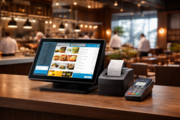
An All-in-One Restaurant POS combines hardware and software in a single integrated package. Typically, this includes a touchscreen terminal, receipt printer, card reader, cash drawer, and POS software designed to work seamlessly together.
All-in-one systems are ideal for restaurants that want an out-of-the-box solution without having to integrate separate components.
5. Enterprise POS Systems
Large restaurant chains, multi-location franchises, and enterprise-level operations often require comprehensive solutions. Enterprise Restaurant POS Software supports centralized management of multiple outlets, advanced analytics, and high-volume transaction processing.
6. Hybrid POS Systems
A Hybrid POS System combines elements of both cloud-based and on-premise systems. It stores critical data locally for offline access while also syncing with cloud servers when internet connectivity is available. Hybrid POS is suitable for restaurants that want cloud features but operate in areas with inconsistent internet connectivity.
7. Self-Service Kiosk POS Systems
Self-service kiosks are increasingly popular in fast-casual restaurants and quick-service establishments. These systems allow customers to place their own orders using a touchscreen interface. Kiosks integrate with your main POS system so orders automatically flow into the kitchen and billing systems, eliminating manual entry.
8. Tablet-Based POS Systems
Tablet POS systems are lightweight and cost-effective alternatives to full-sized terminals. They function similarly to mobile POS systems but are usually fixed at strategic service points like host stands, cashier counters, or drive-thru windows. They are great options for small to medium-sized restaurants and cafés.
Restaurant PoS Systems: Best Practices
Implementing a Restaurant POS System can significantly improve operational efficiency, customer satisfaction, and revenue management. However, to fully leverage its capabilities, restaurants must follow strategic best practices that ensure smooth implementation and long-term success. Below are essential best practices explained in detailed paragraph form.
1. Choose the Right POS System
Selecting the right Restaurant POS Software should begin with understanding your restaurant’s operational structure. A fine-dining restaurant, quick-service outlet, café, food truck, or multi-location franchise will each have unique requirements. You should evaluate transaction volume, service style, integration needs, and future expansion plans before finalizing a system. A solution that aligns with your business model reduces inefficiencies and prevents costly upgrades later.
2. Opt for Cloud-Based Technology
Cloud-Based Restaurant POS systems provide real-time access to sales data, inventory reports, and performance analytics from any location. This flexibility is essential for restaurant owners who manage multiple branches or operate remotely. Cloud systems also offer automatic updates, secure data backups, and reduced hardware dependency. Choosing a cloud solution ensures scalability and long-term adaptability in a competitive market.
3. Invest in Proper Staff Training
Even the most advanced POS system will fail to deliver results if staff members are not properly trained. Employees must understand how to process orders accurately, manage table layouts, handle payments, apply discounts, and resolve billing issues. Comprehensive training reduces human errors, increases service speed, and improves the overall dining experience. Regular refresher sessions can help staff stay updated on new features and system upgrades.
4. Integrate the POS
A Restaurant Management POS should not function in isolation. Integrating it with inventory management systems, accounting software, online ordering platforms, and customer loyalty programs creates a unified operational ecosystem. Seamless integration eliminates manual data entry, reduces discrepancies, and provides a centralized view of business performance. This interconnected approach improves efficiency and supports informed decision-making.
5. Regularly Monitor Reports
Modern POS systems provide detailed reports on daily sales, menu performance, staff productivity, and customer trends. Restaurant owners and managers should review these reports consistently to identify best-selling items, detect slow-moving inventory, and analyze peak service hours. Data-driven decisions based on POS analytics can improve pricing strategies, reduce waste, and optimize labor scheduling.
6. Maintain Data Security Measures
Protecting financial and customer information is critical in today’s digital environment. Restaurants should ensure their POS system uses encrypted payment processing, role-based access controls, and secure cloud storage. Regular software updates and automated data backups are also essential. Strong security practices protect sensitive data and build trust among customers.
Conclusion
In 2026, Restaurant POS Systems have evolved from simple billing tools into powerful, data-driven platforms that streamline operations, enhance customer experiences, and drive profitability. From real-time reporting and inventory management to seamless payment processing and cloud accessibility, a modern POS system plays a central role in restaurant success. Implementing the right solution and following best practices ensures long-term efficiency, scalability, and competitive advantage.
At jiWebTech, we understand that every restaurant has unique operational needs and growth goals. Our tailored Restaurant POS solutions are designed to simplify management, optimize performance, and support sustainable business expansion. Whether you run a single outlet or a multi-location chain, jiWebTech delivers secure, scalable, and future-ready POS systems that empower your restaurant to thrive in an increasingly digital landscape. Contact us to learn more.
Frequently Asked Questions
1. What is a Restaurant POS System and why is it important?
A Restaurant POS System is a digital solution that manages billing, order processing, inventory, payments, and reporting from a single platform. It is important because it improves operational efficiency, reduces manual errors, speeds up service, and provides real-time business insights that help restaurant owners make data-driven decisions.
2. How does a cloud-based Restaurant POS system benefit restaurants?
A cloud-based Restaurant POS allows owners and managers to access sales data, inventory reports, and performance analytics from anywhere. It offers automatic updates, secure data backups, lower hardware dependency, and better scalability, making it ideal for growing restaurants and multi-location businesses.
3. Can a Restaurant POS system manage inventory automatically?
Yes, modern Restaurant POS systems automatically track ingredient usage and update stock levels as sales occur. They provide low-stock alerts, inventory reports, and cost analysis tools to help reduce food waste and control operational expenses.
4. Is a Restaurant POS system suitable for small restaurants and cafes?
Absolutely. Many POS solutions are designed specifically for small and medium-sized restaurants. They offer affordable pricing, easy setup, mobile compatibility, and essential features like billing, order management, and reporting without requiring complex infrastructure.
5. How do I choose the right Restaurant POS system for my business?
To choose the right system, consider your restaurant size, service model, budget, integration needs, and future growth plans. Look for features such as cloud access, payment security, inventory tracking, reporting capabilities, and scalability to ensure the system supports long-term business expansion.