The restaurant industry has evolved rapidly over the last decade, driven by changing customer expectations, rising operational costs, and intense competition. To stay profitable and efficient, restaurants must rely on technology that streamlines operations, improves decision-making, and enhances customer experiences. This is where restaurant POS systems and software play a critical role.
At jiWebTech, we understand that a modern restaurant needs more than a billing tool. A robust restaurant management system integrates sales, inventory, staff management, customer data, and analytics into one centralized platform. In this strategic guide, we explore how restaurant POS systems, restaurant software, and restaurant inventory management contribute to operational excellence and long-term business growth.
Key Takeaways
- Restaurant POS systems serve as the operational backbone, integrating sales, inventory, staff, and analytics into one centralized platform.
- Modern restaurant software enables operational excellence by improving efficiency, accuracy, and customer experience.
- Effective restaurant inventory management is essential for controlling costs, reducing waste, and maximizing profitability.
- Custom POS software for restaurant businesses ensures scalability, flexibility, and seamless third-party integrations.
- Choosing the right restaurant management system partner like jiWebTech drives long-term growth and operational success.
Understanding Restaurant POS Systems and Software
What Are Restaurant POS Systems?
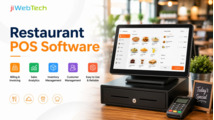
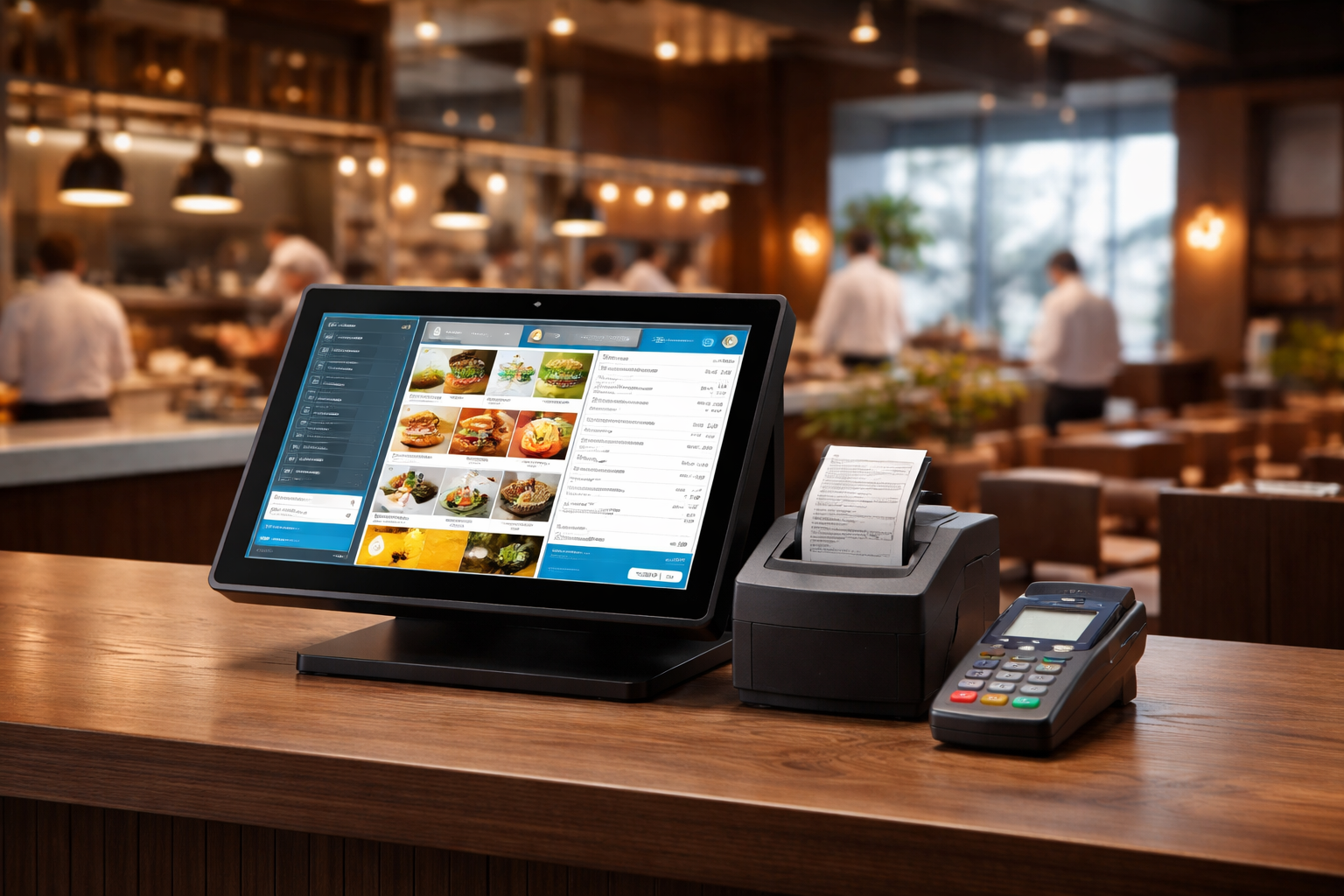
Restaurant POS systems are digital platforms that manage transactions, orders, payments, and operational workflows within a restaurant. Unlike traditional cash registers, modern POS solutions act as the core of the entire restaurant management software ecosystem.
They allow restaurants to process orders efficiently, track sales in real time, and synchronize data across departments such as the kitchen, inventory, and accounting.
Evolution of Restaurant Software
Earlier, restaurant software focused mainly on billing and order management. Today, advanced POS software for restaurant operations includes cloud integration, mobile ordering, AI-powered analytics, and seamless third-party integrations.
This evolution has transformed POS systems into strategic business tools rather than simple operational utilities.
Difference Between POS Software and Restaurant Management System
While POS software handles transactions and order flow, a full restaurant management system covers inventory, staffing, reporting, supplier management, and customer engagement. Businesses aiming for scalability benefit most from integrated systems rather than standalone tools.
Why Operational Excellence Matters in the Restaurant Industry
Operational excellence is the foundation of sustainable success in the restaurant business. With tight margins and high competition, even minor inefficiencies can lead to revenue loss.
Efficient operations ensure faster service, accurate billing, reduced wastage, improved staff productivity, and consistent customer experiences. Implementing the right restaurant POS systems helps restaurants maintain control over daily operations while enabling strategic planning through data insights.
Key Components of Modern Restaurant POS Systems
Order Management and Billing
A core feature of any POS software for restaurant operations is fast and accurate order processing. Orders can be placed through multiple channels, including dine-in, takeaway, online ordering, and delivery platforms.
Automated billing reduces human errors, speeds up checkout, and improves customer satisfaction.
Table and Floor Management
Modern restaurant management software includes intelligent table management features. These allow staff to view table availability, manage reservations, and reduce wait times.
Optimized floor management leads to better space utilization and higher table turnover rates.
Kitchen Display Systems (KDS)
Kitchen Display Systems replace traditional paper tickets with digital order displays. Orders flow directly from the POS to the kitchen, reducing miscommunication and preparation delays.
This integration enhances coordination between front-of-house and back-of-house teams.
Payment Processing and Integrations
Advanced restaurant POS systems support multiple payment methods, including cards, digital wallets, UPI, and contactless payments. Integration with accounting and payment gateways ensures accurate financial tracking and faster settlements.
Employee and Role Management
Staff performance directly impacts service quality. Restaurant software includes features for role-based access, attendance tracking, shift scheduling, and performance monitoring.
This improves accountability while simplifying workforce management.
Sales Reporting and Analytics
Real-time analytics provide insights into daily sales, peak hours, best-selling items, and customer preferences. These reports help restaurant owners make data-driven decisions that improve profitability.
Customer Relationship Management
Integrated CRM tools allow restaurants to store customer data, manage loyalty programs, and personalize promotions. This strengthens customer retention and repeat business.
Restaurant Inventory Management for Cost Control
Importance of Restaurant Inventory Management
Effective restaurant inventory management is essential for controlling food costs and minimizing waste. Overstocking leads to spoilage, while understocking affects service quality.
A smart restaurant management system ensures accurate stock tracking and timely replenishment.
Real-Time Inventory Tracking
Modern restaurant software updates inventory automatically as orders are processed. This real-time visibility helps restaurants maintain optimal stock levels and avoid shortages.
Supplier and Purchase Management
Inventory modules allow restaurants to manage suppliers, track purchase orders, and compare vendor pricing. This streamlines procurement and improves cost efficiency.
Waste Reduction and Portion Control
POS-linked inventory systems help monitor ingredient usage and portion consistency. Identifying high-waste items enables corrective actions that reduce operational losses.
Forecasting and Demand Planning
Using historical data, restaurant inventory management tools forecast demand trends. This helps restaurants prepare for seasonal fluctuations and special events without unnecessary overstocking.
How to Develop a Restaurant POS Software
Requirement Analysis and Business Goals
Developing a custom restaurant POS system begins with understanding business requirements. Factors such as restaurant size, service model, and growth plans influence feature selection.
At jiWebTech, we focus on aligning technology with long-term business objectives.
Choosing the Right Technology Stack
Selecting scalable and secure technologies is crucial. Cloud-based architectures, mobile compatibility, and API integrations ensure flexibility and future readiness.
UI/UX Design for Ease of Use
Restaurant staff operate in fast-paced environments. Intuitive interfaces reduce training time and minimize errors, ensuring smooth daily operations.
Core Feature Development
Essential modules include billing, order management, inventory control, reporting, and user management. These features form the backbone of reliable restaurant software.
Integration with Third-Party Platforms
Modern restaurants rely on delivery apps, payment gateways, and accounting tools. Seamless integrations enhance functionality without operational disruption.
Testing and Quality Assurance
Extensive testing ensures system stability, data accuracy, and security. A reliable POS minimizes downtime and protects sensitive business information.
Deployment and Ongoing Support
Post-deployment support is vital for system updates, scalability, and performance optimization. Continuous improvement keeps the restaurant management system aligned with business growth.
Choosing the Right Restaurant POS Systems for Your Business
Selecting the right restaurant POS systems depends on several factors, including business size, service model, and growth plans.
Key Considerations
- Customization based on restaurant type
- Scalability for future expansion
- Ease of use for staff
- Integration with existing tools
- Reliable technical support
At jiWebTech, we follow a consultative approach to understand each restaurant’s unique needs before designing or implementing a restaurant management software solution.
Future Trends in Restaurant POS Systems and Software
The future of restaurant software is driven by automation, artificial intelligence, and data intelligence. Emerging trends include:
- AI-driven demand forecasting
- Automated restaurant inventory management
- Contactless ordering and payments
- Voice-enabled ordering systems
- Advanced customer personalization
Restaurants that invest in future-ready restaurant management systems will gain a significant competitive advantage.
Why Choose jiWeb Technologies for Restaurant Software Development
At jiWebTech, we specialize in building scalable, secure, and performance-driven restaurant POS systems and software tailored to real-world business needs. Our solutions are designed to support operational excellence and long-term growth.
Why businesses trust jiWebTech:
- Expertise in custom restaurant management software development
- Scalable POS software for restaurant operations
- Advanced restaurant inventory management solutions
- Secure and cloud-ready system architecture
- Seamless third-party integrations
- Ongoing support and system optimization
Conclusion
In today’s competitive hospitality landscape, investing in advanced restaurant POS systems is no longer optional. A well-designed restaurant management system improves efficiency, reduces costs, and enhances customer experiences.
At jiWebTech, we help restaurants transform operations through intelligent restaurant software solutions that deliver measurable results. Whether you are launching a new restaurant or upgrading existing systems, our expertise ensures operational excellence at every stage. Contact us to learn more.
FAQ's
1. How can restaurant POS systems improve operational efficiency?
By automating order processing, billing, inventory updates, and staff management, POS systems reduce human errors, save time, streamline workflows, and provide real-time insights that allow managers to optimize restaurant operations effectively.
2. How does restaurant inventory management help reduce costs?
Inventory modules track stock in real-time, identify overstocked or understocked items, manage supplier orders efficiently, and monitor waste, helping restaurants minimize spoilage, optimize procurement, and maintain better cost control.
3. Can restaurant POS software integrate with online delivery platforms?
Yes, advanced restaurant POS systems can seamlessly integrate with food delivery apps, third-party marketplaces, accounting software, and payment gateways, enabling real-time order updates, synchronized inventory management, and consistent reporting across all channels.
4. How long does it take to implement a restaurant POS system?
Implementation typically ranges from 4 to 12 weeks, depending on restaurant size, customization requirements, integration complexity, staff training, and data migration, with additional time for testing and optimization to ensure smooth operations.
5. How can POS software improve customer experience?
POS systems enhance customer experience by enabling faster order processing, personalized offers, loyalty programs, accurate billing, digital receipts, and integration with CRM tools to understand preferences and deliver consistent, high-quality service.
6. Is cloud-based POS software better than on-premise solutions?
Cloud-based POS systems provide real-time access, scalability, remote monitoring, automatic updates, and reduced infrastructure costs, making them more flexible and suitable for multi-location restaurants compared to traditional on-premise solutions.