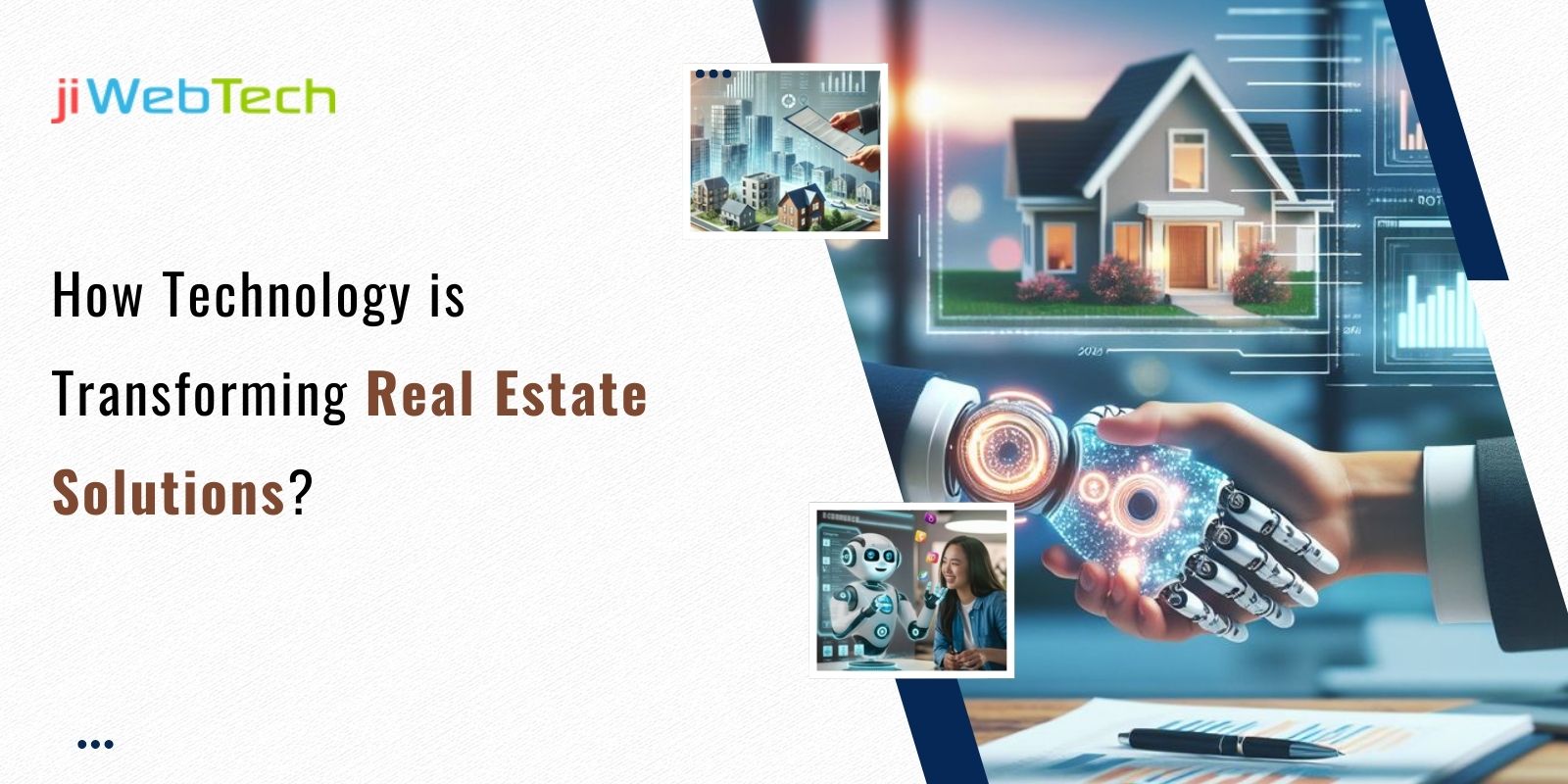
In the past decade, technology has revolutionized nearly every industry, and real estate is no exception. From property management to customer experience, technological innovations have reshaped how real estate businesses operate, market, and deliver services. At jiWebTech, we have closely observed these changes and actively implemented real estate solutions and real estate software to help businesses thrive in this digital era. This blog explores how technology is transforming real estate solutions, offering a detailed insight into every aspect of this transformation.
Key Takeaways
- Technology has revolutionized real estate by making property management and client interactions more efficient.
- Virtual tours, AR, and mobile apps enhance property showcasing and improve customer engagement.
- AI, predictive analytics, and blockchain enable data-driven decisions, secure transactions, and accurate valuations.
- Automation and CRM-integrated solutions streamline administrative tasks and boost productivity.
- Implementing modern real estate software transforms business operations and drives growth in the digital era.
The Role of Technology in Modern Real Estate
The real estate industry has traditionally relied on manual processes, physical documentation, and face-to-face interactions. However, with the rapid adoption of technology, processes that were once time-consuming and error-prone are now streamlined and efficient. Technology has introduced automation, real-time data analytics, and digital communication tools that enable real estate professionals to manage properties, interact with clients, and make data-driven decisions with ease.
At jiWebTech, we have developed comprehensive real estate software that caters to the modern demands of property developers, real estate agencies, and investors. Our solutions integrate technology at every level, enhancing efficiency, reducing costs, and improving overall service quality.
Key Ways Technology is Transforming Real Estate Solutions
Online property listing platforms have completely changed the way properties are marketed and sold. Traditional methods like newspaper ads and physical brochures are being replaced by interactive websites, mobile apps, and digital portals. Buyers and renters can now access extensive property details, photos, virtual tours, and even neighborhood insights at the click of a button.
Real estate software developed by jiWebTech allows agencies to manage property listings seamlessly, ensuring that all information is accurate, up-to-date, and easy to navigate. Features such as automated alerts for new listings, price changes, and client inquiries make property marketing more efficient and effective.
Virtual tours and augmented reality have revolutionized property showcasing. Prospective buyers no longer need to physically visit every property; instead, they can explore 3D virtual models of homes, offices, and commercial spaces from the comfort of their own devices.
By integrating AR technology into real estate solutions, jiWebTech enables realtors to offer immersive experiences that help clients visualize spaces accurately. This not only saves time but also increases engagement and conversion rates.
Artificial Intelligence (AI) has introduced data-driven precision into property valuation. AI algorithms analyze factors such as market trends, location demographics, property condition, and comparable sales to provide accurate price estimations.
Real estate software with AI capabilities, like the ones provided by jiWebTech, helps investors and agents make informed decisions. Advanced analytics allow professionals to forecast market movements, identify lucrative opportunities, and minimize investment risks.
Administrative work, including lease management, document verification, and client communication, consumes a significant portion of a real estate professional's time. Technology has automated many of these repetitive tasks, reducing human error and freeing up time for strategic activities.
With real estate solutions from jiWebTech, property managers can automate tasks such as tenant onboarding, payment reminders, and contract renewals. Automation not only enhances productivity but also improves client satisfaction by ensuring timely and accurate communication.
Effective client management is critical in real estate. CRM systems help track interactions with potential buyers, manage leads, and provide personalized services.
At jiWebTech, our real estate software integrates advanced CRM features to maintain detailed client profiles, track inquiries, and schedule follow-ups. This integration ensures that no lead is lost and enhances the overall customer experience, ultimately boosting sales and client retention.
Blockchain technology is transforming the way real estate transactions are conducted. By providing a decentralized, tamper-proof ledger, blockchain ensures transparency, security, and faster property transfers.
Our real estate solutions at jiWebTech leverage blockchain to facilitate secure property ownership records, smart contracts, and digital payment processing. This reduces the risk of fraud, simplifies legal procedures, and builds trust among buyers, sellers, and investors.
The rise of smartphones has made mobile applications an essential tool in real estate. Buyers, agents, and property managers can access property information, communicate with clients, and monitor transactions anytime and anywhere.
jiWebTech develops feature-rich mobile apps that allow users to browse listings, schedule appointments, submit applications, and receive instant notifications. Mobile integration ensures convenience, flexibility, and a modern user experience for clients and professionals alike.
Predictive analytics helps real estate professionals anticipate market trends, assess property demand, and identify profitable investment opportunities. By analyzing historical data and current market conditions, predictive models provide actionable insights.
Our real estate software solutions at jiWebTech include predictive analytics tools that help businesses stay ahead of competition, optimize pricing strategies, and improve ROI. This data-driven approach empowers agents, investors, and developers to make smarter decisions.
IoT technology enables smart home and office solutions, where devices like thermostats, security cameras, and lighting systems are interconnected and remotely controllable.
jiWebTech integrates IoT features into real estate solutions, allowing property managers to offer smart living experiences. Automated monitoring, energy management, and enhanced security not only attract tech-savvy buyers but also increase property value and efficiency.
Digital marketing tools such as social media campaigns, email automation, and search engine optimization (SEO) have transformed how real estate businesses promote their offerings. Online visibility, targeted ads, and interactive campaigns attract potential buyers more effectively than traditional marketing methods.
At jiWebTech, our real estate software includes marketing automation features that help agents reach the right audience at the right time. By integrating CRM, analytics, and campaign management, our solutions ensure that marketing efforts are precise, measurable, and result-oriented.
Cloud technology allows real estate teams to collaborate in real-time, regardless of location. Property data, contracts, and project updates are accessible on-demand, reducing delays and improving coordination.
jiWebTech offers cloud-based real estate solutions that enable seamless collaboration among agents, clients, and managers. With secure access and real-time updates, teams can work more efficiently, reduce errors, and enhance overall productivity.
With digital transformation comes the need for robust security measures. Real estate transactions involve sensitive data, including financial information, personal documents, and legal contracts.
Our real estate software solutions at jiWebTech ensure data security through encryption, secure access controls, and compliance with industry regulations. This instills confidence in clients, reduces the risk of data breaches, and ensures that businesses operate within legal frameworks.
Benefits of Implementing Technology in Real Estate
The real estate industry is experiencing a significant digital shift. From property search to transaction management and post-sale services, technology is transforming how real estate businesses operate. Implementing the right technological solutions not only streamlines operations but also enhances customer experience, decision-making, and profitability.
1. Improved Operational Efficiency
Technology automates time-consuming manual tasks such as data entry, document management, rent collection, and reporting. Property management software and CRM systems help real estate professionals manage listings, clients, and transactions more efficiently, reducing errors and administrative workload.
2. Enhanced Customer Experience
Digital tools provide faster, more transparent, and more personalized experiences for buyers, sellers, and tenants. Features such as online property listings, virtual tours, instant communication, and digital documentation make the buying or renting process more convenient and engaging.
3. Better Data-Driven Decision Making
With the help of data analytics and AI-powered tools, real estate companies can analyze market trends, pricing patterns, customer behavior, and investment risks. These insights support informed decision-making, helping businesses optimize pricing strategies and identify high-growth opportunities.
4. Increased Market Reach
Technology enables real estate businesses to reach a broader audience beyond geographical boundaries. Online platforms, social media marketing, and virtual property tours allow international and outstation buyers to explore and invest in properties remotely, expanding market potential.
5. Faster and More Secure Transactions
Digital documentation, e-signatures, and blockchain-based solutions help speed up transactions while ensuring security and transparency. These technologies reduce paperwork, minimize fraud, and improve trust between buyers, sellers, and intermediaries.
6. Cost Savings and Higher ROI
Automation and digital marketing reduce operational and marketing costs. Virtual tours minimize the need for repeated site visits, while targeted digital campaigns improve lead quality. Over time, these efficiencies translate into higher returns on investment.
7. Smart Property Management
Technology simplifies property management through centralized platforms that handle maintenance requests, tenant communication, lease tracking, and payment processing. This results in better asset management, improved tenant satisfaction, and reduced vacancy rates.
8. Increased Property Value and Appeal
Smart home features such as automated lighting, security systems, and energy-efficient controls enhance property value. Tech-enabled homes attract modern buyers and tenants who prioritize comfort, safety, and sustainability.
9. Improved Transparency and Trust
Access to real-time information, digital records, and transaction tracking builds transparency across the real estate process. Buyers and investors gain greater confidence when information is easily accessible and verifiable.
10. Scalability and Business Growth
Technology allows real estate businesses to scale operations without proportionally increasing costs. Cloud-based platforms and digital tools support portfolio expansion, multi-location management, and long-term growth strategies.
Challenges in Adopting Real Estate Technology
The real estate industry is rapidly embracing digital transformation, with technologies such as artificial intelligence, virtual tours, blockchain, and property management software reshaping how business is conducted. While these innovations offer significant benefits, adopting real estate technology is not without its challenges. Understanding these obstacles is crucial for developers, brokers, property managers, and investors looking to stay competitive in a tech-driven market.
1. High Initial Investment Costs: One of the biggest barriers to adopting real estate technology is the cost. Advanced tools such as AI-powered analytics platforms, virtual reality systems, and blockchain-based solutions often require substantial upfront investment. For small and mid-sized real estate firms, these expenses can be difficult to justify without a clear and immediate return on investment.
2. Resistance to Change: Real estate has traditionally relied on established processes and personal relationships. Many professionals are hesitant to move away from familiar methods, fearing disruption to their workflow. This resistance to change can slow down technology adoption and limit the potential benefits of digital solutions.
3. Lack of Technical Expertise: Implementing and managing modern real estate technology requires technical knowledge. Many organizations lack skilled personnel who can operate, maintain, and optimize these systems. Without proper training or IT support, even the best technology may remain underutilized.
4. Data Security and Privacy Concerns: Real estate transactions involve sensitive personal and financial information. As more processes move online, the risk of data breaches and cyberattacks increases. Ensuring data security, compliance with regulations, and customer privacy remains a major challenge for technology-driven real estate firms.
5. Integration with Existing Systems: Many real estate businesses use legacy systems for accounting, customer relationship management, or property records. Integrating new technologies with these older systems can be complex, time-consuming, and costly, often leading to operational disruptions.
6. Inconsistent Data Quality: Technology solutions rely heavily on accurate and up-to-date data. However, real estate data is often fragmented, unstructured, or outdated. Poor data quality can limit the effectiveness of AI analytics, automation tools, and market forecasting models.
7. Regulatory and Legal Barriers: Real estate is highly regulated, and laws vary by region. Adopting technologies such as blockchain, digital signatures, or online transactions must align with local legal frameworks. Navigating these regulatory complexities can slow innovation and create uncertainty.
8. Scalability Challenges: Not all real estate technologies scale easily. A solution that works well for a small portfolio may struggle to support large or geographically diverse operations. Ensuring that technology can grow with the business is a key concern for long-term adoption.
9. Customer Adaptation and Trust: While technology can improve customer experience, not all clients are comfortable using digital tools. Some buyers and sellers still prefer in-person interactions and traditional documentation. Building trust in digital platforms and educating customers remains a challenge.
The Future of Real Estate Solutions
The future of real estate lies in further automation, AI-driven insights, virtual and augmented reality, and enhanced client engagement through technology. Predictive analytics, smart city integrations, and fully digital transaction platforms are set to redefine the industry.
jiWebTech is at the forefront of this transformation, continuously innovating real estate software that caters to evolving market demands. By adopting technology-driven strategies, real estate businesses can remain competitive, efficient, and customer-centric in a rapidly changing environment.
Conclusion
Technology has undeniably transformed the real estate industry, offering smarter, faster, and more efficient real estate solutions. From AI-powered analytics to immersive virtual tours, blockchain-enabled transactions, and cloud-based collaboration, every aspect of real estate has been enhanced through innovation.
At jiWebTech, we pride ourselves on delivering state-of-the-art real estate software that empowers businesses to thrive in the digital era. By embracing technological solutions, real estate professionals can optimize operations, improve client satisfaction, and achieve greater business success. Partner with jiWebTech to experience the future of real estate solutions today.
Frequently Asked Questions
AI analyzes historical data, market trends, location demographics, and property features to provide accurate valuations. This data-driven approach helps investors, agents, and developers make informed decisions, optimize pricing strategies, and minimize investment risks effectively.
Blockchain provides secure, tamper-proof digital records, enabling transparent ownership verification and smart contracts. It reduces fraud risks, speeds up transactions, and ensures secure financial exchanges, building trust among buyers, sellers, and investors.
Mobile apps provide on-the-go access to property listings, client communications, and transaction monitoring. They increase convenience, enhance user engagement, and enable real-time updates, allowing agents and buyers to manage properties anytime, anywhere.
IoT connects devices such as thermostats, cameras, and lighting systems, enabling remote monitoring and control. Smart properties offer energy efficiency, enhanced security, and convenience, attracting tech-savvy buyers and increasing property value.
Cloud platforms allow real-time access to property data, contracts, and updates for teams across locations. This facilitates seamless collaboration, reduces delays, ensures consistent communication, and enhances productivity among agents, clients, and property managers.