How many times have you tried to find a free parking spot on your way to work or home, but couldn’t? We think this is annoying, right? But don’t worry—there are ways to fix parking problems.
The global smart parking systems market is estimated to reach $48.3 billion by 2033, growing at a CAGR of 19.3%. Smart parking is a new way to help people find parking spots quickly. It uses sensors and cameras to check which spots are empty, helping drivers park without wasting time searching for parking spots.
Also, parking managers can use smart parking systems and make a better use of parking spaces. They can also change the prices depending on how many people need parking. This helps them earn more money and run parking lots more efficiently because cars park and leave faster. Further, city planners can use the data from these systems to help make cities smarter. They can manage resources and reduce traffic problems.
Benefits of a Smart Parking System
Here are a few benefits of a smart parking system:
Less worry for drivers: Finding a free parking spot can be hard and annoying. But smart sensors and cameras connected to the internet make it easier. These cameras watch many parking spaces at once and tell you which spots are free or full. So, if you see all spots are taken, you can quickly find another place to park instead of driving around and wasting time.
Save time and fuel: Apps that show free parking spots use special sensors and cameras in parking areas. These sensors check if a car is in a spot or not and send this information to the app right away over the internet. The app then updates and shows drivers which spots are open or full. This way, drivers can find free parking quickly without driving around.
Better parking control: People who manage parking lots can see what is going on from any place. This helps them make good choices, like closing a parking lot if no one is using it or opening a new one where many people need parking. This helps cities and businesses spend their money wisely.
More income for parking owners: Real-time information helps parking managers plan well and make their services better. They can also change prices when it is busy, so they can earn more money when many spots are full.
Less pollution: When drivers find parking quickly, they don’t need to wait or keep driving. This helps reduce traffic jams near parking spots.
Less traffic jams: When drivers find parking fast, they don’t have to wait or drive around. This helps stop traffic jams near parking places.
Easy payment: With smart parking, drivers can pay with an app on their phone. This makes paying fast and easy, so parking is simple and without problems.
More safety: Cameras in smart parking lots help managers watch the area. They check license plates to know who comes and goes, making the parking lot safer.
Types of Smart Parking Solutions
In this section, let us discuss the various types of smart parking solutions based on the location of the sensor:
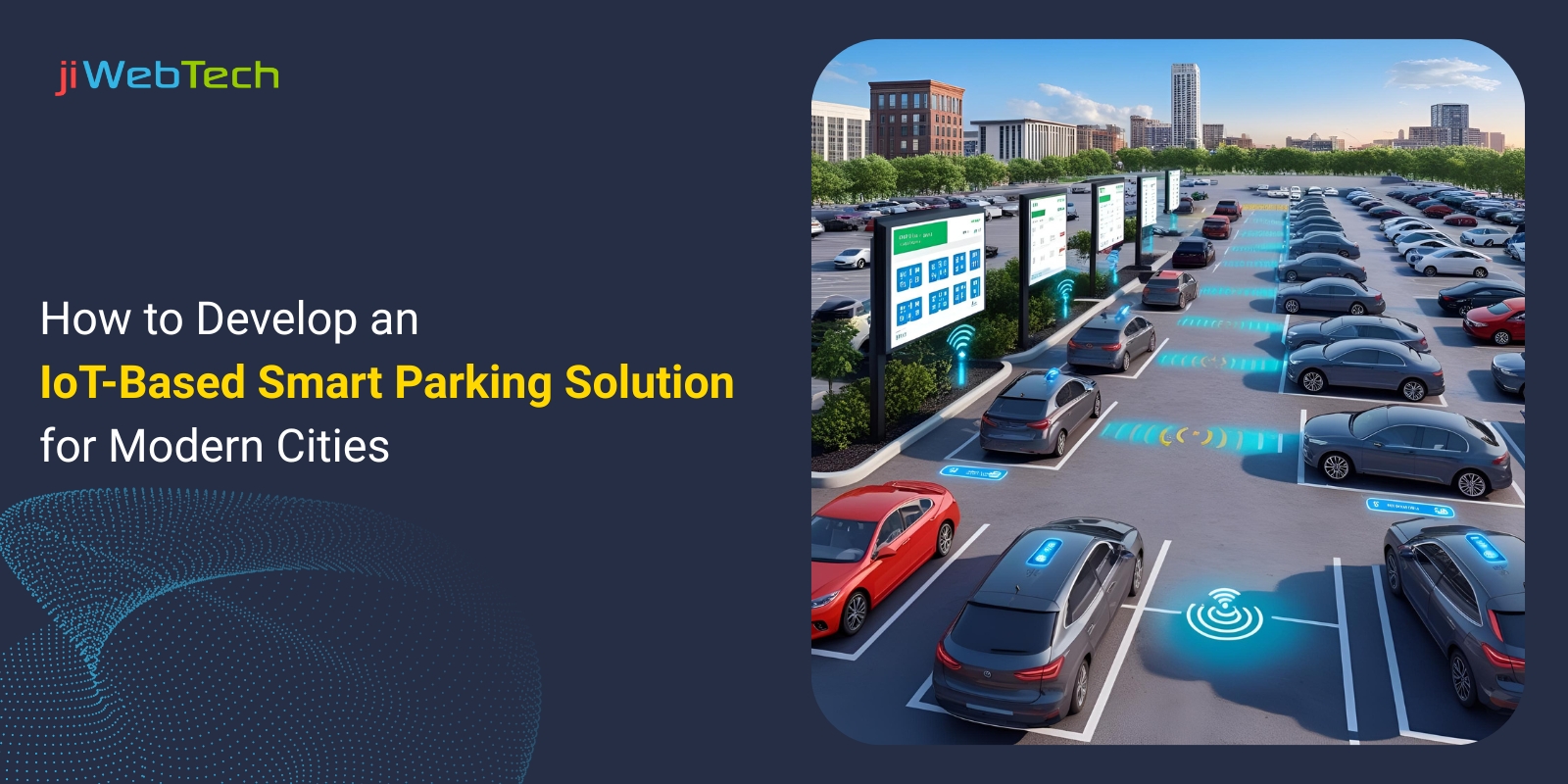
Ground Sensor Technology: Ground sensors are put inside parking spaces to detect if a car is parked there. They are great for small and medium parking lots where checking each spot is useful. These sensors give real-time and accurate information about which spaces are free or taken. This information can be shown on signs or phone apps to help drivers find parking quickly.
Counter Technology: Counter technology uses gates and sensors to count the number of vehicles entering and leaving a parking lot. It is beneficial in locations in which controlling access is essential and in which you want to know how many parking spots are available. Counter technology helps control the parking area effortlessly and guarantees that the space is used properly.
Camera-based Technology: Sensors and cameras placed above parking areas monitor numerous parking spots all at once. They help figure out which spots are empty and which ones are occupied. This information is then sent to drivers, making it easier for them to find a parking spot fast and save time.
IoT-based Solutions:IoT smart parking uses sensors to check which parking spots are free or taken. This helps parking managers see how the spaces are being used and decide the best prices. These systems can be set up in different parking areas and can grow bigger to make managing parking easier.
How Much Does It Cost to Build a Smart Parking Solution?
The cost to develop a smart parking solution varies widely depending on the features, technology, and scale you want. Here’s a simple breakdown:
Basic Apps: Basic smart parking apps show you parking locations on a map and tell you if spots are open. The cost to develop basic apps ranges between $20,000 to $30,000 or more.
More Advanced Apps: If you are looking to develop more advanced, then you might want to add advanced features such as real-time updates, the ability to book spots online, user reviews, and a user-friendly design can increase the cost. The cost to develop an advanced app ranges between $30,000 to $50,000.
IoT-Enabled Systems: If you want to use sensors in parking lots to automatically check if a spot is free or occupied, then the cost can range from $35,000 to $40,000 or more.
Highly Customized and Large-Scale Solutions: For very large projects that use artificial intelligence (AI), complicated math formulas, and lots of hardware, the cost can be $100,000 or more – sometimes even up to $250,000 or more.
Component / Feature | Estimated Cost Range (USD) | Notes |
|---|---|---|
Basic App Development | $20,000 – $30,000+ | Simple map + availability only. |
Mid-Level App w/ Real-Time Updates | $30,000 – $50,000+ | Adds dynamic booking and payments. |
IoT Sensor Integration | $20,000 – $50,000+ | Hardware + integration with backend. |
Advanced or AI-Enabled System | $100,000 – $250,000+ | Includes predictive analytics & extensive hardware. |
Hardware (Sensors, Cameras, Gateways) | $80,000 – $250,000 | Depends on sensor type & number of spaces. |
Backend & Cloud Infrastructure | $40,000 – $150,000 | Scalable real-time data processing. |
Admin Dashboard Development | $8,000 – $25,000 | Operator interface. |
Third-Party API Licenses | $5,000 – $20,000 | Maps, payments, analytics. |
Testing & QA | $5,000 – $15,000 | Ensures quality and reliability. |
Security & Data Privacy | $5,000 – $15,000 | Encryption, compliance. |
Cloud Hosting & Storage | $3,000 – $10,000 /year | Ongoing server costs. |
Maintenance & Support | $10,000 – $50,000 annually | Includes updates and support. |
Factors Affecting Smart Parking Development Cost
The cost of developing a smart parking solution is not fixed. It varies depending on multiple technological, operational, and business factors. From hardware procurement to long-term maintenance, each element contributes to the overall investment required to build a reliable, scalable, and user-friendly IoT-based smart parking system. Understanding these factors helps businesses and city authorities make informed decisions and optimize budgets.
1. Scope of Features and Functionalities
Basic solutions may only display real-time parking availability, while advanced platforms offer features such as spot reservation, digital payments, dynamic pricing, automated entry/exit, license plate recognition, and predictive analytics. Each additional feature increases development effort, testing requirements, and integration complexity, leading to higher costs.
2. Type and Quantity of Sensors
Low-cost sensors such as magnetic or ultrasonic sensors are commonly used for basic occupancy detection. More advanced options, such as camera-based systems with computer vision, provide higher accuracy and richer data but require higher investment. Additionally, the total number of parking spaces covered directly affects hardware expenses, installation effort, and future maintenance costs.
3. Communication Technology and Connectivity
Smart parking systems rely on continuous data transmission between sensors and backend servers.
Technologies such as LoRaWAN and NB-IoT are cost-efficient for large outdoor deployments due to low power consumption. Cellular networks (4G/5G) provide high-speed connectivity but involve recurring data costs. The choice of network impacts not only setup costs but also long-term operational expenses and system reliability.
4. Backend Architecture and Cloud Infrastructure
Costs depend on the complexity of backend services, data storage requirements, real-time analytics, and scalability needs. Systems handling thousands of sensors and users require robust cloud infrastructure, load balancing, and high availability. Advanced data processing and reporting tools further increase infrastructure and development expenses.
5. Mobile and Web Application Development
Creating mobile apps for both Android and iOS, along with a web-based admin dashboard, requires additional design, development, and testing efforts. Features such as interactive maps, navigation assistance, booking management, notifications, and multilingual support add to the overall cost. A polished user interface and seamless experience often demand higher investment.
6. Integration with Third-Party Services
Common integrations include payment gateways, mapping services, navigation tools, SMS or email notification services, and city transportation systems. Each integration may involve licensing fees, API usage costs, and additional development effort. Managing and maintaining these integrations adds to long-term expenses.
7. Security and Data Privacy Requirements
Since the system handles sensitive user data and payment information, strong security measures are required. These include data encryption, secure authentication, compliance with data protection regulations, and regular security testing. Implementing and maintaining these safeguards increases development and operational costs but is essential for trust and compliance.
8. Development Team and Expertise
The cost of development is heavily influenced by the experience and location of the development team.
Hiring skilled IoT developers, cloud architects, and mobile app engineers increases upfront costs but ensures system reliability and scalability. Development rates vary across regions, and choosing between in-house development, outsourcing, or hybrid models can significantly affect the final budget.
9. Scalability and Deployment Size
A single parking lot or building requires fewer resources compared to a city-wide deployment involving thousands of parking spaces. Large-scale projects demand more sensors, stronger infrastructure, advanced analytics, and higher maintenance budgets, increasing both initial and ongoing costs.
10. Maintenance, Support, and Upgrades
Ongoing maintenance includes system monitoring, bug fixes, software updates, hardware replacement, and customer support. As technology evolves, upgrades may be required to improve performance, security, or add new features. These recurring costs must be planned from the beginning.
Final Word
Smart parking systems are becoming popular in many cities today. They help drivers find empty parking spots quickly. This saves time and makes parking easier. Smart parking systems reduces traffic jams as fewer cars drive around looking for parking, making roads safer and reduce accidents.
So, if you want to develop a smart parking system for your business, jiWebTech is here to help. Our team understands your requirements and then designs the best plan to fit your goals. So, what are you waiting for? Get in touch with us today, we’re here to support you every step of the way.
Frequently Asked Questions
1. What is an IoT-based smart parking solution?
An IoT-based smart parking solution uses sensors, wireless communication, and real-time data processing to monitor and manage parking spaces efficiently. It allows drivers to find available spots via mobile apps or digital displays, reducing traffic congestion and improving urban mobility.
2. What are the core components of a smart parking system?
Key components include:
- IoT Sensors: Detect vehicle presence in parking spots.
- Gateways: Collect data from sensors and transmit it to the cloud.
- Cloud Platform: Stores and processes data.
- Mobile/Web App: Displays parking availability and allows booking/payment.
- Admin Dashboard: Helps city authorities monitor and manage usage and analytics.
3. Which types of sensors are commonly used?
- Ultrasonic sensors (detect object presence)
- Infrared sensors (detect motion/vehicle entry)
- Magnetic sensors (detect disturbances in magnetic fields when a car is present)
- Camera-based systems (ANPR and video analytics for advanced monitoring)
4. What technologies are used for connectivity?
Common wireless technologies include:
- LoRaWAN
- NB-IoT
- Wi-Fi
- Zigbee
- Bluetooth Low Energy (BLE)
- 4G/5G cellular networks
5. How is real-time data processed and accessed?
Data from sensors is sent to a central cloud server, where it is processed using real-time analytics. The processed data is then made available via APIs for integration into apps, digital signage, or third-party platforms.
7. How can users interact with the smart parking system?
Users typically:
- Use a mobile app to find available parking spots
- Navigate directly to the spot using integrated maps
- Reserve and pay for parking via the app
- Receive notifications and time alerts