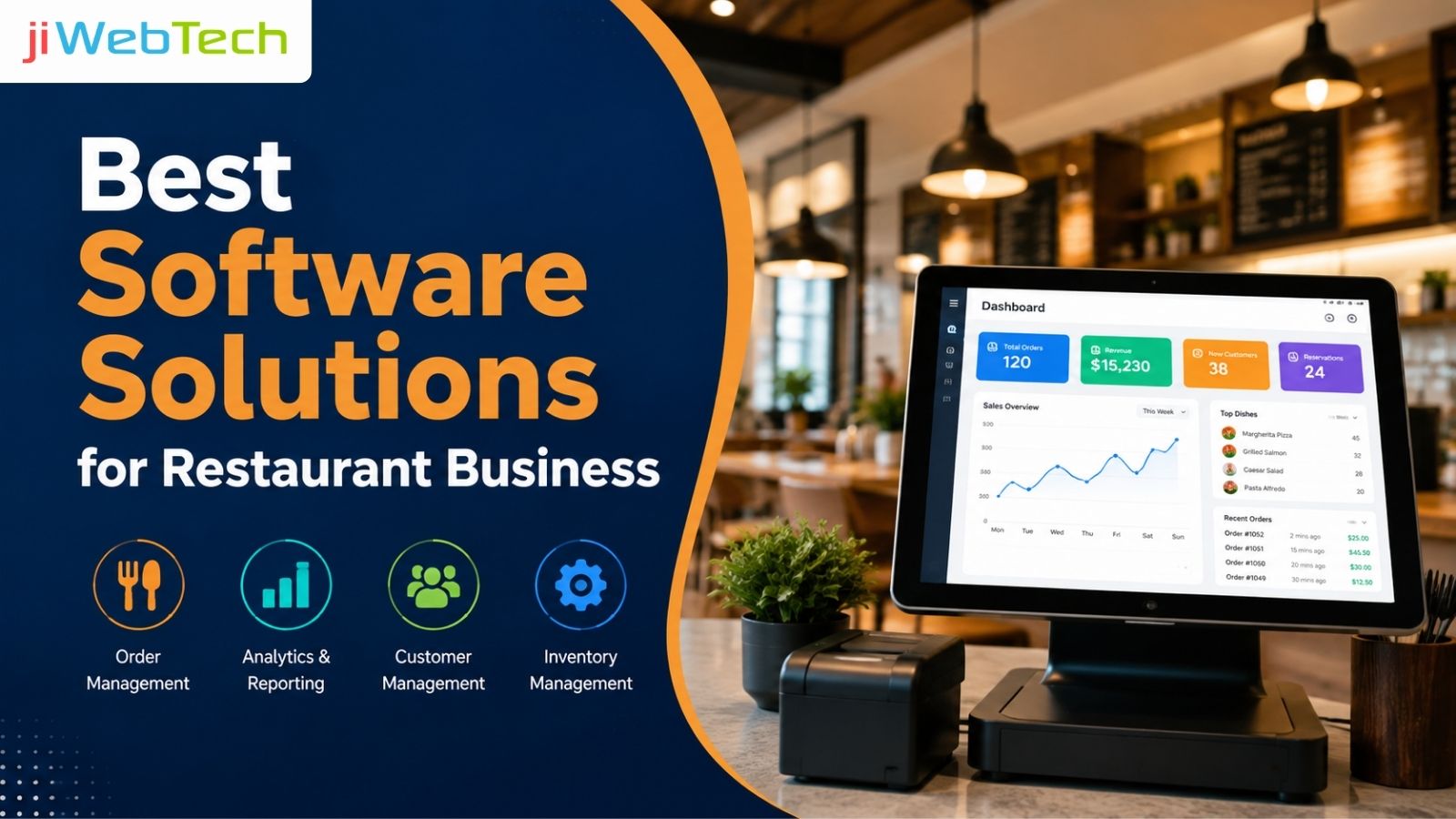
Running a successful restaurant is no longer limited to serving delicious food and providing good customer service. As competition increases, restaurant owners need efficient systems to manage orders, inventory, staff, customer relationships, payments, marketing, and multiple locations. The right online software solutions can bring these operations together and help restaurants improve efficiency while creating a more consistent customer experience.
Modern restaurant management software enables businesses to automate repetitive tasks, monitor performance in real time, reduce operational errors, and make informed decisions using accurate data. From cloud-based POS systems and online ordering platforms to inventory management, CRM, accounting, and analytics solutions, technology can support almost every aspect of restaurant operations.
For growing restaurants, investing in the right digital tools is not simply about replacing manual processes. It is about creating a scalable technology infrastructure that can support increasing orders, customers, employees, and locations without creating unnecessary operational complexity.
Whether you operate a single restaurant, a growing chain, a cloud kitchen, or a multi-location food business, implementing the right online software solutions can help you control costs, increase productivity, improve customer retention, and build a stronger foundation for long-term growth.
Key Takeaways
- Automate restaurant operations to reduce manual work, delays, and avoidable human errors.
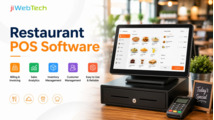
- Use cloud-based POS software to centralize orders, payments, sales, and business information.
- Integrate inventory management to reduce food waste and maintain appropriate stock levels.
- Build stronger customer relationships through CRM, loyalty, and personalized marketing tools.
- Connect online ordering platforms with restaurant operations for faster and more accurate order processing.
- Use real-time analytics to identify profitable products, operational problems, and growth opportunities.
- Choose scalable restaurant software that can support additional employees, orders, and locations.
Benefits of Investing in Restaurant Software Solutions
Implementing the right restaurant software can transform how a food business manages its daily operations, serves customers, controls costs, and plans future growth. Instead of depending on disconnected tools and manual processes, restaurants can centralize critical operations through integrated digital systems. From faster order processing and smarter inventory control to personalized customer engagement and real-time analytics, technology helps restaurants build efficient, scalable, and profitable operations.
1. Faster and Efficient Restaurant Operations
Restaurant software automates several repetitive activities, including order processing, billing, inventory updates, payment management, reporting, and administrative tasks. By reducing manual work, employees can complete essential responsibilities faster and with fewer errors. This allows restaurants to handle higher order volumes efficiently while maintaining smooth workflows during peak hours.
- Automates repetitive operational processes
- Reduces manual data entry and errors
- Speeds up order and billing processes
- Improves coordination between restaurant teams
2. Deliver a Better Customer Experience
Customer expectations continue to evolve, with diners looking for fast service, convenient ordering, accurate bills, flexible payment methods, and personalized interactions. Restaurant software connects different customer touchpoints and helps businesses deliver consistent experiences across dine-in, takeaway, delivery, and online ordering channels.
- Enables faster and more accurate ordering
- Supports multiple payment and ordering options
- Improves communication between staff and customers
- Creates a more convenient dining experience
3. Data-Driven Business Decisions
Restaurant management software provides access to real-time information about sales, orders, inventory, customers, expenses, and employee performance. Instead of relying on assumptions or manually prepared reports, owners can analyze accurate business data and identify trends. These insights help management make better decisions about pricing, staffing, purchasing, promotions, and menu planning.
- Tracks real-time sales and revenue
- Identifies customer and ordering trends
- Supports smarter pricing and promotional decisions
- Provides actionable performance insights
4. Improve Inventory Control
Inventory management is one of the most important areas affecting restaurant profitability. Software can monitor stock levels, ingredient usage, purchase records, and inventory management in restaurant in real time. This helps businesses avoid excessive purchasing and identify products that are being wasted. Better inventory visibility can reduce unnecessary expenses while ensuring essential ingredients remain available.
- Monitors inventory levels in real time
- Helps reduce unnecessary food waste
- Improves purchasing and replenishment planning
- Prevents unexpected ingredient shortages
5. Increase Customer Retention and Loyalty
Attracting new customers is important, but encouraging existing customers to return can create stronger long-term business value. Restaurant CRM and loyalty software can help businesses understand customer preferences, order history, and engagement patterns. Restaurants can use this information to create personalized offers, loyalty rewards, special promotions, and targeted campaigns that encourage repeat purchases.
- Supports personalized customer communication
- Enables digital loyalty and reward programs
- Tracks customer preferences and purchase history
- Encourages repeat orders and visits
6. Multi-Location Restaurant Management
Expanding from one location to several branches can introduce significant management challenges. Cloud-based restaurant software allows businesses to centralize information and monitor different locations through a single platform. Owners can compare branch performance, review sales, track inventory, and maintain standardized processes without managing each location through completely separate systems.
- Centralizes information across multiple locations
- Enables branch-wise performance monitoring
- Standardizes operational processes
- Simplifies centralized management and reporting
7. Strengthen Revenue and Cost Management
Restaurant profitability depends on maintaining a healthy balance between revenue generation and operational costs. Restaurant software can provide detailed visibility into sales, expenses, inventory usage, menu performance, and order patterns. By identifying profitable products and unnecessary expenses, businesses can optimize their operations and make more informed financial decisions.
- Tracks revenue and operational expenses
- Identifies high-performing menu items
- Helps optimize purchasing costs
- Supports stronger profit management
8. Build a Scalable Technology Foundation
Restaurant software should not only solve today's operational challenges but also prepare the business for future expansion. Scalable platforms can support additional employees, higher order volumes, new branches, online ordering channels, third-party integrations, and advanced analytics. This allows restaurant owners to expand their operations without repeatedly replacing their core technology infrastructure.
- Supports increasing order and customer volumes
- Makes new-location expansion easier
- Enables third-party platform integrations
- Provides flexibility for future digital growth
Optimize Restaurant Operations with Smart Integrated Technology
Restaurant growth becomes difficult when different departments rely on disconnected systems. Integrated restaurant software can connect sales, ordering, inventory, payments, staff management, and reporting within one digital ecosystem. This improves visibility, reduces duplicate work, and enables restaurant owners to manage daily operations more efficiently as business volumes increase.
1. Centralize Orders and Payments
A modern POS system can bring dine-in, takeaway, delivery, and online orders together through a centralized platform. Employees can process orders faster while managers gain a clear overview of daily sales and transactions. This reduces confusion during busy periods and creates a more organized workflow.
2. Automate Repetitive Tasks
Restaurant employees spend considerable time handling repetitive administrative activities such as order entry, bill generation, stock updates, and basic reporting. Automation can handle many of these tasks, allowing employees to focus more on food quality, customer service, and other activities that directly contribute to business growth.
3. Connect Multiple Restaurant Channels
Customers increasingly expect restaurants to provide several ordering options, including websites, mobile applications, delivery platforms, and in-store ordering. Connecting these channels to a centralized restaurant management system helps businesses manage incoming orders more efficiently and maintain consistent pricing, menus, and operational information across platforms.
4. Improve Staff Coordination
Restaurant management software can simplify employee scheduling, attendance tracking, task allocation, and performance monitoring. Managers can identify staffing requirements according to expected demand and avoid unnecessary scheduling gaps. Better coordination helps restaurants maintain service quality even during weekends, holidays, promotions, and other high-demand periods.
Control Costs and Inventory with Smart Restaurant Management Software
Effective inventory and cost management play a critical role in maintaining restaurant profitability. Smart restaurant management software gives businesses real-time visibility into stock levels, ingredient consumption, purchasing activities, supplier costs, and operational expenses. By automating inventory processes and analyzing business data, restaurants can minimize waste, control spending, prevent shortages, and make smarter procurement decisions.
1. Monitor Inventory in Real Time
Real-time inventory tracking allows restaurant managers to monitor ingredient quantities, stock movements, consumption, and availability from a centralized system. Instead of relying on manual spreadsheets or physical stock checks, businesses can access updated inventory information and respond quickly to changing requirements.
2. Reduce Food Waste and Losses
Food waste can significantly impact restaurant profitability, particularly when businesses handle large quantities of perishable ingredients. Inventory software can help identify frequently wasted products, monitor expiry dates, analyze consumption patterns, and improve purchasing decisions. This enables restaurants to use resources more efficiently while reducing avoidable financial losses.
3. Optimize Purchasing and Procurement
Smart inventory systems can provide valuable information about purchasing requirements based on sales history, stock levels, and ingredient consumption. Restaurant managers can use these insights to determine appropriate order quantities, avoid excessive purchasing, and maintain better supplier coordination. This creates a more organized and cost-effective procurement process.
4. Track Food and Operational Costs
Understanding where money is being spent is essential for improving restaurant profitability. Restaurant management software can help monitor ingredient costs, supplier expenses, operational spending, and other business-related costs. With centralized financial information, owners can identify unnecessary expenses and develop strategies to improve cost efficiency.
5. Prevent Stock Shortages and Overstocking
Both stock shortages and excessive inventory can create operational and financial problems. Shortages may lead to unavailable menu items and dissatisfied customers, while overstocking can increase storage expenses and food waste. Automated inventory alerts help managers identify low-stock and excess-stock situations before they negatively affect restaurant operations.
Increase Revenue Through Online Ordering, CRM, and Customer Engagement
Scaling a restaurant requires more than operational efficiency. Restaurants must continuously attract customers, encourage repeat visits, and create convenient ordering experiences. Online ordering platforms, customer relationship management systems, loyalty programs, and digital marketing tools can help restaurants strengthen customer relationships while creating additional opportunities to increase revenue.
1. Launch a Direct Online Ordering Platform
A restaurant-owned online ordering website or application gives customers a convenient way to browse menus, customize meals, and place orders. Direct ordering can also provide restaurants with greater control over the customer experience and valuable customer information. This creates opportunities for targeted promotions and stronger long-term relationships.
2. Implement Customer Loyalty Programs
Loyalty software can encourage customers to return by providing rewards, points, discounts, or personalized offers. Restaurants can design programs around customer behavior rather than offering the same promotion to everyone. A well-managed loyalty strategy can increase repeat purchases and encourage customers to engage with the restaurant regularly.
3. Personalize Customer Marketing
CRM systems can organize customer information and purchasing behavior, enabling restaurants to create more relevant marketing campaigns. Businesses can promote suitable offers based on previous orders, preferences, or purchasing frequency. Personalized communication can make promotions more useful while helping restaurants improve customer engagement and retention.
4. Use Digital Marketing Automation
Restaurant marketing software can automate campaigns across email, SMS, social media, and other digital channels. Businesses can schedule promotional campaigns, announce new menu items, promote special events, and communicate offers without manually managing every campaign. Automation helps restaurant teams maintain consistent marketing activity as the business grows.
How to Choose the Best Online Software for Your Restaurant
Choosing the right restaurant software requires more than comparing features and pricing. Businesses should evaluate usability, scalability, integrations, security, customization, and long-term value. The ideal solution should simplify operations, support customer expectations, integrate existing systems, and provide flexibility as the restaurant expands.
1. Evaluate Your Requirements
Identify the operational challenges your restaurant needs to solve before selecting software. Consider ordering, inventory, payments, customer management, staff scheduling, reporting, and accounting requirements. Choosing technology based on actual business needs prevents unnecessary features and ensures better utilization of your investment.
2. Prioritize Ease of Use and Accessibility
Restaurant employees need software they can understand and operate quickly, especially during busy service hours. Select an intuitive platform with simple navigation, accessible dashboards, and straightforward workflows. Easy-to-use software reduces training requirements, improves employee adoption, and minimizes operational disruptions.
3. Check Integration with Existing Systems
Your restaurant software should connect smoothly with POS systems, payment gateways, accounting platforms, delivery services, CRM tools, inventory systems, and online ordering channels. Strong integrations eliminate duplicate data entry, improve information flow, and create a connected digital ecosystem for more efficient restaurant management.
4. Consider Scalability for Future Expansion
Choose software capable of supporting increasing customers, employees, orders, transactions, and restaurant locations. A scalable platform allows businesses to expand without replacing their core technology. This reduces future implementation costs while providing the flexibility required for long-term restaurant growth and operational development.
5. Examine Security and Data Protection
Restaurant platforms manage important business and customer information, making security a critical consideration. Evaluate authentication, user permissions, encryption, backups, access controls, and data protection practices. Strong security measures help protect sensitive information while supporting reliable and trustworthy digital restaurant operations.
6. Customization and Flexible Features
Every restaurant has different workflows, menus, operational processes, and customer requirements. Select software that offers customization options for dashboards, reports, ordering processes, integrations, and business rules. Flexible technology can adapt to your restaurant instead of forcing your business to change established processes.
7. Compare Pricing with Long-Term Business Value
Software pricing should be evaluated alongside its potential business value. Consider subscription costs, implementation expenses, integrations, maintenance, support, and future upgrades. A slightly higher investment may provide greater efficiency, automation, and scalability, ultimately delivering stronger returns as your restaurant continues growing.
Why Digital Transformation Matters for Restaurant Growth
Restaurant growth is increasingly connected to the ability to adopt technology strategically. Businesses that continue depending entirely on spreadsheets, paper-based processes, disconnected systems, and manual reporting may find it increasingly difficult to manage growing operational complexity.
Digital transformation allows restaurants to connect their operations and create a centralized source of business information. Instead of checking multiple systems separately, managers can access important information through integrated dashboards and software platforms.
The goal should not be to implement technology simply because it is available. Restaurant owners should identify their biggest operational challenges and select software that directly addresses those challenges. A carefully planned technology strategy can improve efficiency today while preparing the business for future growth.
Conclusion
Scaling a restaurant business requires a combination of excellent food, customer-focused service, efficient operations, and smart technology. Online restaurant software solutions can help businesses automate daily processes, manage inventory, simplify ordering, improve customer engagement, analyze performance, and coordinate multiple locations.
However, choosing technology should be a strategic decision rather than simply purchasing software with numerous features. The right solution should fit the restaurant's business model, integrate with existing systems, remain easy for employees to use, and provide enough flexibility to support future growth.
At jiWebTech, we help businesses transform their ideas and operational requirements into reliable digital solutions designed around their specific needs. From restaurant management platforms and online ordering systems to custom web and mobile applications, our solutions can help food businesses build connected and scalable digital operations.
With the right technology partner and a well-planned digital strategy, restaurants can streamline operations, improve customer experiences, control costs, and create new opportunities for sustainable business growth. Contact us to learn more.
Frequently Asked Questions
1. How can restaurant software help increase business profitability?
Restaurant software improves profitability by reducing operational inefficiencies, controlling inventory costs, automating processes, and providing data-driven insights that help owners make smarter business decisions.
- Reduces unnecessary food waste
- Improves inventory management
- Automates repetitive operations
- Identifies profitable menu items
2. What restaurant software should a growing business invest in?
Growing restaurants should prioritize integrated software covering POS, online ordering, inventory, CRM, payments, analytics, and employee management to create a connected operational environment.
- Cloud-based POS system
- Online ordering platform
- Inventory management software
- Customer relationship management
3. Can restaurant software support multiple locations?
Yes, cloud-based restaurant management platforms can centralize information from multiple branches, allowing owners and managers to monitor sales, inventory, employees, and performance through a unified system.
- Centralized business dashboard
- Branch-wise performance tracking
- Standardized operational workflows
- Centralized reporting and analytics
4. How does online ordering software benefit restaurants?
Online ordering software gives customers a convenient ordering channel while helping restaurants organize digital orders, improve processing speed, and create opportunities for direct customer engagement and repeat purchases.
- Convenient ordering experience
- Faster order processing
- Direct customer engagement
- Better order management
5. Why is inventory management important for restaurants?
Inventory management helps restaurants maintain appropriate stock levels, reduce waste, control purchasing costs, and prevent ingredient shortages that can affect menu availability and customer satisfaction.
- Tracks stock movement
- Reduces food waste
- Supports accurate purchasing
- Prevents inventory shortages
6. How can restaurant CRM software improve customer retention?
Restaurant CRM software stores customer information and purchasing patterns, helping businesses deliver personalized promotions, loyalty rewards, and targeted communications that encourage customers to return more frequently.
- Personalized customer offers
- Loyalty program management
- Customer purchase tracking
- Targeted marketing campaigns
7. Should restaurants choose customized or ready-made software?
The right choice depends on business requirements. Ready-made software can support standard operations, while customized solutions are better for restaurants requiring unique workflows, integrations, features, or scalability.
- Customized business workflows
- Flexible third-party integrations
- Industry-specific functionality
- Scalable technology architecture
8. What should restaurants consider before selecting software?
Restaurants should evaluate usability, scalability, integrations, security, customization, pricing, technical support, and compatibility with their existing operational systems before selecting a software solution.
- Ease of employee adoption
- Integration capabilities
- Data security measures
- Long-term scalability