In today’s fast-moving digital economy, businesses need more than just a strong product or service to stay competitive. They need smart systems that help them attract leads, nurture customer relationships, streamline communication, and improve conversions. This is where Customer Relationship Management and marketing automation come together as a powerful growth engine.
The demand for automation is growing rapidly across industries. In fact, the marketing automation market size is expected to reach $13.97 billion by 2030, growing at a compound annual growth rate (CAGR) of 12.8%. Additionally, 91% of organizations say demand for automation is increasing. Requests for more automation come from multiple departments, including marketing (26%), research and development (39%), administration and operations (38%), and customer service (33%). This clearly shows that automation is no longer a niche trend, it is becoming a core business necessity.
Understanding CRM
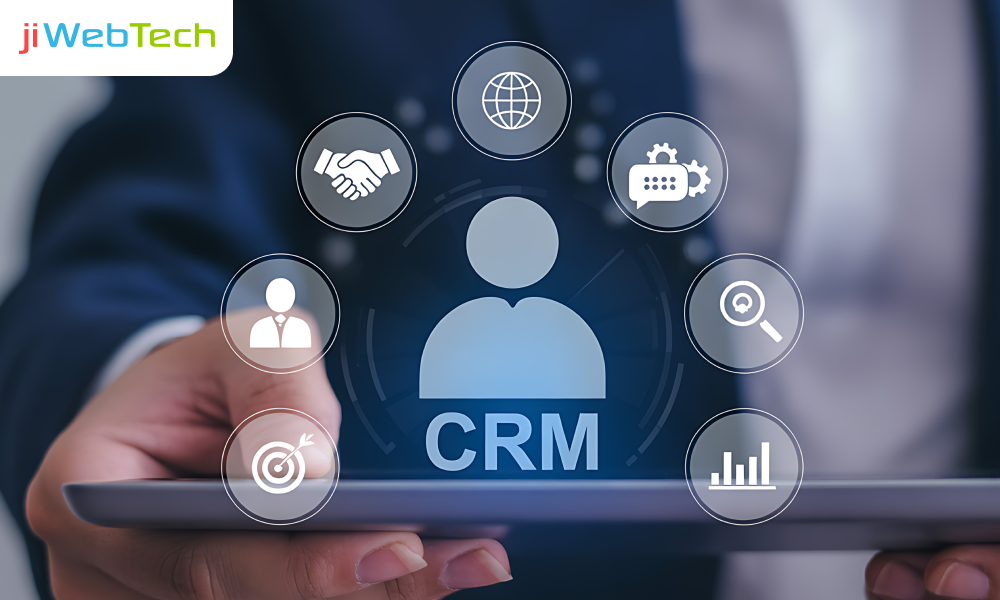
Customer Relationship Management (CRM) is a technology and strategy that helps businesses manage interactions with current and potential customers throughout the entire customer journey. It acts as a centralized platform where all customer-related information, such as contact details, communication history, purchase records, preferences, inquiries, and sales activities, is stored and organized in one place.
Instead of relying on spreadsheets, scattered emails, or disconnected tools, CRM allows sales, marketing, and support teams to work with the same up-to-date customer data. This improves collaboration, reduces manual effort, and ensures that every customer interaction is informed and consistent. A CRM system helps businesses track leads, monitor sales pipelines, schedule follow-ups, manage opportunities, and maintain long-term customer relationships more efficiently.
In simple terms, CRM software helps businesses understand their customers better, respond faster, personalize communication, and improve customer satisfaction. Whether it is used to capture leads, follow up on prospects, close deals, or retain existing customers, CRM plays a critical role in improving operational efficiency and driving business growth.
What is Marketing Automation?
Marketing automation is the use of software and digital tools to automate repetitive marketing tasks, campaigns, and customer communication across different channels. It helps businesses streamline their marketing efforts by automatically sending the right message to the right audience at the right time, based on customer behavior, preferences, and engagement history.
Instead of manually handling every email, follow-up, reminder, or campaign, marketing automation allows businesses to create predefined workflows that are triggered by specific actions. For example, when a user signs up for a newsletter, downloads a brochure, abandons a cart, requests a demo, or visits a product page, the system can automatically send personalized emails, reminders, offers, or follow-up messages without requiring manual intervention.
Benefits of CRM and Marketing Automation
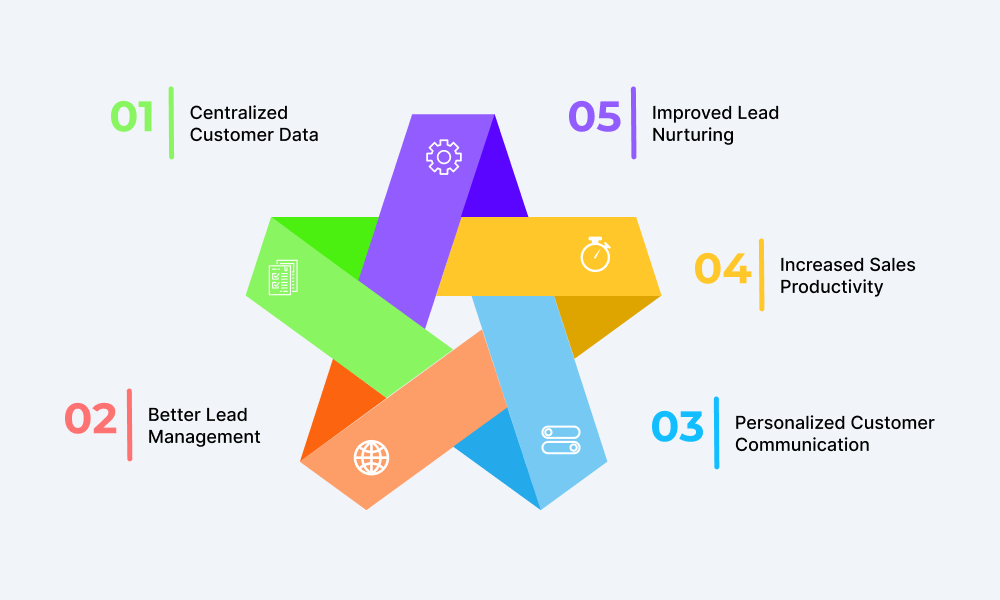
When CRM and marketing automation are used together, they create a powerful and connected business ecosystem that helps organizations streamline customer engagement, automate repetitive tasks, improve team productivity, and generate better sales and marketing results. Below are the major benefits explained in more detail:
1. Centralized Customer Data
CRM stores all customer information, communication records, purchase history, inquiries, and engagement details in one centralized platform. This allows teams to access accurate, updated data instantly, reduce confusion, improve collaboration, and deliver more personalized, consistent, and efficient customer interactions across every business touchpoint.
2. Better Lead Management
Businesses can capture leads from websites, social media, forms, ads, landing pages, and referrals, then organize them properly within the CRM. Marketing automation ensures quick lead assignment, proper segmentation, faster follow-ups, and a structured process that reduces missed opportunities and improves conversion potential significantly.
3. Improved Lead Nurturing
Marketing automation helps businesses build stronger relationships with potential customers by sending timely emails, educational content, reminders, and personalized campaigns based on behavior and interest. This keeps leads engaged for longer periods, builds trust gradually, and increases the chances of turning prospects into paying customers.
4. Increased Sales Productivity
Sales teams can spend less time on manual tasks like data entry, tracking communication, or sorting leads, and more time focusing on qualified prospects. CRM provides a complete view of customer interactions, while automation helps prioritize high-intent leads, resulting in faster responses and better sales performance.
5. Personalized Customer Communication
By combining CRM data with automation tools, businesses can create more relevant and personalized messages for different customer segments. Emails, offers, recommendations, and follow-ups can be tailored based on user behavior, preferences, lifecycle stage, and purchase history, which improves engagement and strengthens customer relationships over time.
CRM vs Marketing Automation: Understanding the Difference
Although CRM (Customer Relationship Management) and marketing automation are closely connected and often used together, they serve different primary purposes within a business. Both systems are designed to improve customer engagement and business efficiency, but they focus on different stages of the customer journey and support different teams in achieving their goals.
At a basic level, CRM is focused on managing customer relationships, sales activities, and customer data, while marketing automation is focused on automating marketing campaigns, lead nurturing, and communication workflows. Understanding the difference between the two is important because many businesses assume they are the same, when in reality they perform complementary but distinct roles.
What Does CRM Focus On?
CRM is primarily built to help businesses organize and manage customer information in a structured way. It acts as a centralized database that stores contact details, communication history, sales notes, support interactions, and pipeline progress. Sales and customer service teams use CRM to track leads, manage opportunities, schedule follow-ups, and maintain stronger long-term relationships with customers. A CRM system helps businesses:
- Store and manage customer and lead information
- Track phone calls, emails, meetings, and follow-ups
- Monitor the sales pipeline and deal stages
- Improve sales forecasting and opportunity tracking
- Maintain a complete history of customer interactions
- Support customer service and account management efforts
In simple terms, CRM helps businesses understand who the customer is, what interactions have happened, and what the next action should be.
What Does Marketing Automation Focus On?
Marketing automation, on the other hand, is designed to automate repetitive marketing activities and customer communication. It helps businesses send targeted messages, nurture leads, segment audiences, and guide prospects through the buyer journey without manually managing every interaction. Marketing automation is commonly used to:
- Send welcome emails and drip campaigns
- Nurture leads over time with educational content
- Segment audiences based on behavior or interests
- Trigger emails after form submissions or downloads
- Send abandoned cart reminders or promotional offers
- Score leads based on engagement and readiness to buy
- Re-engage inactive users or customers automatically
In simple terms, marketing automation helps businesses decide what message to send, when to send it, and to whom, based on customer actions and behavior.
Who Uses CRM and Who Uses Marketing Automation?
While CRM and automation solutions can be used by multiple departments, they are typically used by different teams for different purposes.
CRM is mostly used by:
- Sales teams
- Business development teams
- Account managers
- Customer support teams
- Client relationship managers
Marketing automation is mostly used by:
- Digital marketing teams
- Email marketing specialists
- Growth marketers
- Campaign managers
- Lead generation teams
However, in modern businesses, the best results come when both teams use these systems together in a connected workflow.
How Do CRM and Marketing Automation Work Together?
Although CRM and marketing automation are different, they are most powerful when integrated. When both systems work together, businesses can create a seamless journey from lead generation to conversion and long-term retention. For example:
- A visitor fills out a form on your website.
- Marketing automation sends a welcome email and starts a nurture sequence.
- The lead’s behavior is tracked, such as email opens, clicks, or page visits.
- The lead is scored based on engagement.
- Once the lead becomes qualified, the CRM notifies the sales team.
- Sales can then view the lead’s full history and continue the conversation more effectively.
This combination ensures that leads are not only captured, but also nurtured intelligently and handed over to sales at the right time.
Why Does the Difference Between CRM and Marketing Automation Matter?
Understanding the difference between CRM and marketing automation helps businesses:
- Choose the right business automation software for the right purpose
- Avoid investing in incomplete or mismatched platforms
- Improve sales and marketing alignment
- Build better customer journeys
- Create more effective lead management strategies
- Increase conversions and long-term customer value
If a business uses only CRM marketing strategy and solutions without automation, it may struggle with consistent lead nurturing and campaign efficiency. If it uses only marketing automation without CRM, it may lack visibility into customer history, sales progress, and relationship management. That’s why both are important.
Conclusion
At jiWebTech, we believe that business growth is no longer driven by effort alone, it is driven by smart systems, streamlined workflows, and meaningful customer engagement. In today’s fast-paced digital environment, businesses need more than just basic customer management tools; they need integrated solutions that can help them build stronger relationships, improve communication, and automate repetitive tasks with precision. This is exactly where CRM and marketing automation create long-term value.
At jiWebTech, we understand that every business has unique goals, challenges, and customer journeys. That’s why we focus on delivering tailored CRM development services and marketing automation solutions that align with your business objectives, simplify operations, and create measurable impact. With the right tools and the right strategy, businesses can unlock new levels of productivity, personalization, and performance. The future of business success lies in smarter customer engagement, and jiWebTech is here to help you build it. Contact us to learn more.
Frequently Asked Questions
1. What is CRM and why is it important for businesses?
CRM, or Customer Relationship Management, is a system that helps businesses manage customer interactions, organize lead data, and improve communication across sales, marketing, and support teams.
- CRM stands for Customer Relationship Management.
- Stores customer and lead information in one centralized platform.
- Helps businesses track calls, emails, meetings, and follow-up activities.
- Improves coordination between sales, marketing, and support teams.
- Reduces the risk of losing leads or missing important follow-ups.
2. What is marketing automation and how does it help businesses?
Marketing automation is a technology that allows businesses to automate repetitive marketing tasks such as email campaigns, lead nurturing, follow-ups, and customer engagement. It helps businesses save time, improve efficiency, and deliver personalized communication at scale.
- Marketing automation uses software to automate marketing tasks and workflows.
- Helps send emails, reminders, offers, and follow-ups automatically.
- Improves lead nurturing by delivering relevant content at the right time.
- Reduces manual work and increases operational efficiency.
- Allows businesses to create consistent communication across customer touchpoints.
3. What is the difference between CRM and marketing automation?
Although CRM and marketing automation are often used together, they serve different purposes. CRM focuses on customer data and relationship management, while marketing automation focuses on campaign execution and automated communication.
- CRM is designed to manage customer relationships, interactions, and sales activities.
- Marketing automation is designed to automate campaigns, communication, and lead nurturing.
- CRM is mostly used by sales, account management, and support teams.
- Marketing automation is mainly used by marketing and lead generation teams.
- CRM tracks who the customer is and where they are in the sales process.
4. How do CRM and marketing automation work together?
CRM and marketing automation work best when integrated. Together, they connect customer data with automated communication, helping businesses create a seamless journey from lead generation to conversion and long-term retention.
- CRM captures and stores customer and lead information in one place.
- Marketing automation uses that data to trigger personalized emails and workflows.
- Helps businesses nurture leads based on behavior and engagement history.
- Lead scoring can identify when a prospect is ready for sales outreach.
- Sales teams can access complete customer interaction history through the CRM.
5. Can small businesses benefit from CRM and marketing automation?
Yes, small businesses can benefit significantly from CRM and marketing automation. These tools help smaller teams stay organized, save time, improve customer communication, and compete more effectively in the digital marketplace.
- Marketing automation helps reduce repetitive manual work for small teams.
- Improves follow-up consistency without needing a large workforce.
- Helps businesses respond faster to inquiries and opportunities.
- Supports better lead nurturing and customer engagement.
- Makes business operations more scalable as the company grows.
6. What are the main benefits of using CRM and marketing automation together?
Using CRM and marketing automation together creates a more connected and efficient business system. It helps businesses manage customer data, automate communication, improve conversions, and support long-term growth through better engagement and smarter workflows.
- Centralizes customer and lead data for better accessibility.
- Automates repetitive sales and marketing tasks to save time.
- Improves lead capture, tracking, and nurturing processes.
- Helps sales teams focus on more qualified and engaged leads.
- Enables more personalized customer communication.