Businesses are no longer driven by instinct alone, they are powered by data. Every click, purchase, interaction, and operational process generates valuable information. Companies that know how to capture, analyze, and apply this data gain a powerful advantage over competitors. This is where data-driven customized software becomes a game changer.
Unlike generic, off-the-shelf software, customized solutions are designed around your business processes, industry requirements, customer behaviors, and long-term growth goals. When these solutions are powered by real-time analytics and actionable insights, they transform operations, increase efficiency, and unlock sustainable growth.
This blog explores how data-driven customized software enhances performance, accelerates business growth, and why partnering with a trusted technology provider such as jiWebTech can redefine your digital transformation journey.
Key Takeaways
- Deloitte reports that companies implementing intelligent automation and analytics can reduce operational costs by 20–30%, significantly improving overall efficiency.
- By reducing manual tasks and minimizing errors, customized software streamlines workflows and improves productivity across departments.
- Businesses can leverage analytics to understand customer behavior and deliver tailored services that increase satisfaction and retention.
- Customized solutions are built to evolve with your business, allowing seamless expansion and feature upgrades
- Companies that adopt data-driven software gain measurable efficiency improvements and a stronger position in the marketplace.
Understanding Data-Driven Customized Software
To fully appreciate the impact of data-driven customized software, it’s important to understand how it differs from traditional digital tools.
The Meaning of Customization
Customized software is specifically designed and developed to meet the unique needs of an organization. Rather than adapting your workflows to match generic software, customized solutions are built around:
- Your internal processes
- Your industry regulations
- Your operational challenges
- Your growth plans
- Your customer engagement strategy
Every business operates differently. A healthcare provider needs secure patient data management. A retail brand requires real-time inventory tracking. A logistics company depends on route optimization and fleet management. Customized software ensures each requirement is addressed precisely.
The Power of Being Data-Driven
Being data-driven means that software doesn’t simply execute commands - it learns from information and generates insights. Data-driven systems:
- Collect structured and unstructured data
- Analyze patterns and trends
- Provide predictive forecasts
- Offer actionable recommendations
- Deliver visual dashboards for clarity
For example, instead of manually reviewing spreadsheets to evaluate sales performance, a data-driven dashboard instantly highlights top-performing products, slow-moving inventory, and revenue growth trends. This transformation shifts businesses from reactive management to proactive leadership.
How Data-Driven Customized Software Boosts Growth
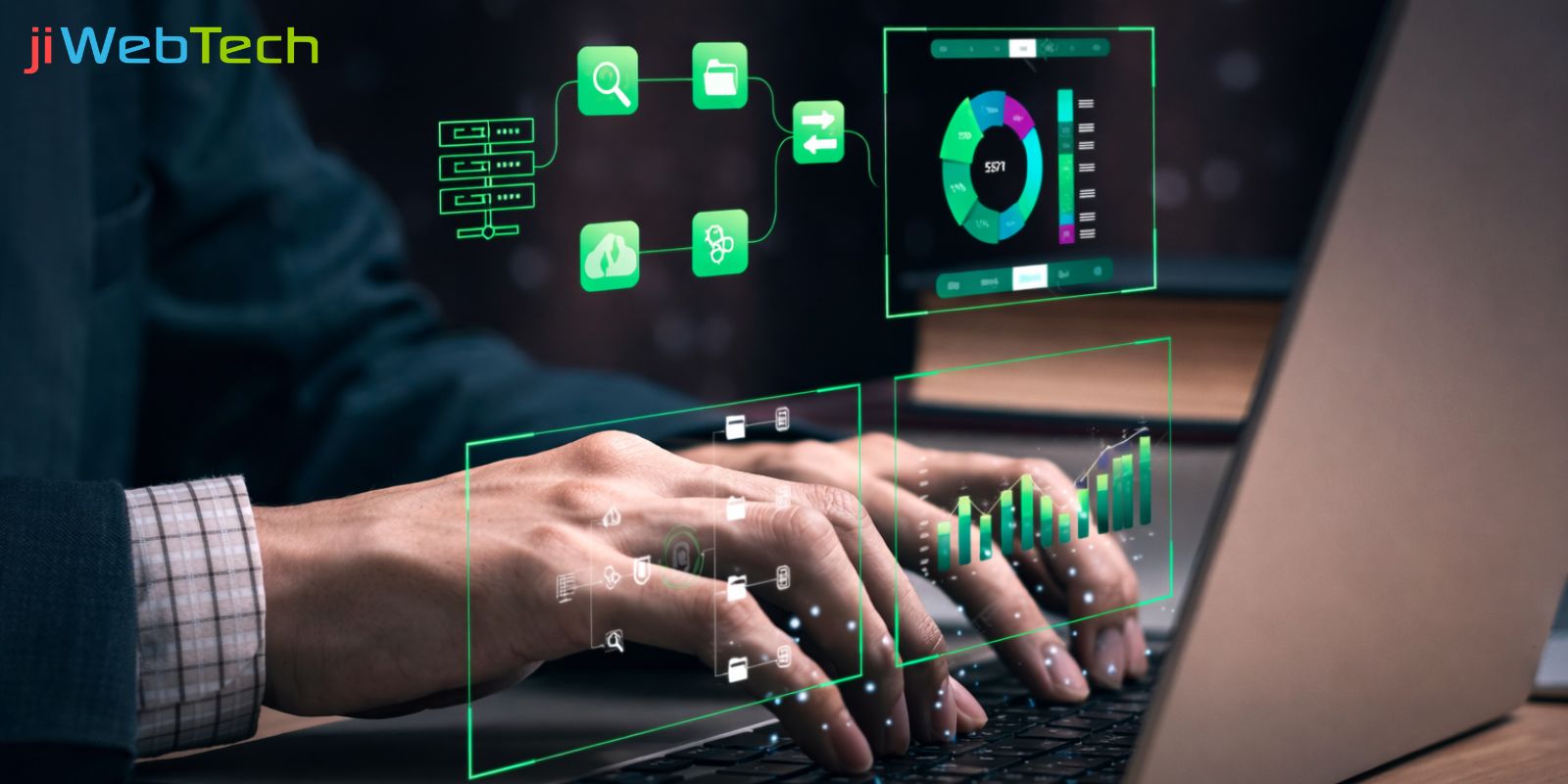
Data-driven customized software is not just a single tool, it is a comprehensive digital ecosystem designed to collect, process, analyze, and optimize business operations. Each component plays a critical role in ensuring efficiency, scalability, and long-term growth. Below is a detailed breakdown of the core components that make such systems powerful and future-ready.
1. Advanced Data Collection
At the heart of every data-driven solution lies a strong data management framework. This component ensures accurate collection, storage, and organization of business information from multiple sources such as:
- Customer interactions
- Sales transactions
- Marketing campaigns
- Inventory systems
- Employee performance metrics
- Third-party integrations
A centralized database eliminates data silos and ensures that all departments work with consistent and updated information. Proper data structuring also improves accessibility and reporting accuracy.
2. Real-Time Analytics Engine
The analytics engine transforms raw data into meaningful insights. It processes structured and unstructured data to generate visual dashboards, charts, and performance metrics.
Key capabilities include:
- KPI tracking
- Revenue and sales analysis
- Customer behavior insights
- Trend identification
- Forecasting and predictive modeling
With real-time analytics, business leaders gain immediate visibility into operations, allowing faster decision-making and proactive adjustments.
3. Intelligent Automation Modules
Automation is essential for improving operational efficiency. Customized software includes automation modules tailored to specific workflows such as:
- Invoice generation
- Inventory updates
- Approval processes
- Email notifications
- Task assignments
By reducing repetitive manual tasks, automation improves productivity, lowers operational costs, and minimizes human error.
4. Custom Workflow Management System
Every business has unique processes. A customized workflow management system ensures that operations follow optimized and clearly defined pathways. This component:
- Maps internal processes digitally
- Defines user roles and permissions
- Tracks task progress in real time
- Identifies bottlenecks
- Improves collaboration between departments
Streamlined workflows ensure consistent performance and operational clarity.
5. Seamless Integration Framework
Modern businesses use multiple digital tools, including CRM, ERP, HRMS, accounting software, and payment gateways. A strong integration framework ensures all systems communicate seamlessly. Benefits include:
- Unified data flow
- Reduced duplication
- Improved reporting accuracy
- Enhanced operational efficiency
API integrations and middleware technologies connect different systems into a cohesive digital infrastructure.
6. Scalable Architecture
Scalability ensures that the software grows with your business. A well-designed system supports:
- Increased user load
- Higher transaction volumes
- Additional features and modules
- Expansion into new markets
Cloud-based infrastructure and modular architecture enable businesses to expand without overhauling existing systems.
Why Business Must Choose jiWebTech’s Online Software Solutions
Choosing the right technology partner is just as important as choosing the right technology. Businesses need more than just software, they need intelligent, scalable, and secure solutions that align with their long-term growth strategy. That’s where jiWebTech’s Online Software Solutions stand out.
jiWebTech combines innovation, industry expertise, and a data-driven approach to deliver customized software that enhances efficiency and drives measurable business growth. Here’s why businesses should trust jiWebTech as their digital transformation partner:
1. Tailor-Made Solutions
No two businesses operate the same way. jiWebTech understands this and develops customized software that aligns perfectly with your:
- Business model
- Operational workflows
- Industry standards
- Customer engagement strategies
- Long-term goals
Instead of forcing you to adapt to generic software, jiWebTech builds solutions that adapt to you.
2. Data-Driven Development Approach
jiWebTech integrates advanced analytics, reporting dashboards, and automation tools into every solution. Our systems are designed to:
- Collect and analyze real-time data
- Generate actionable insights
- Improve decision-making accuracy
- Identify growth opportunities
This data-first mindset ensures businesses operate with clarity, confidence, and measurable results.
3. Future-Ready Architecture
Growth should never be limited by technology. jiWebTech develops software with scalable architecture that allows businesses to:
- Add new features as needed
- Handle increasing customer volumes
- Expand into new markets
- Integrate emerging technologies like AI and automation
Our future-ready solutions evolve alongside your organization.
4. Seamless Integration
Most businesses rely on multiple digital tools, including CRM, ERP, accounting software, payment gateways, and third-party APIs. jiWebTech ensures smooth integration, creating a unified digital ecosystem where systems communicate efficiently. This eliminates data silos, reduces duplication, and improves operational transparency.
5. Strong Focus on Security
With increasing cyber threats and regulatory requirements, data security is critical. jiWebTech incorporates advanced security measures such as:
- Encrypted data storage
- Secure API integrations
- Role-based access controls
- Compliance-ready frameworks
Our proactive security approach protects sensitive business and customer data.
6. ROI-Oriented Solutions
jiWebTech designs software with measurable business outcomes in mind. Our customized solutions help:
- Reduce operational costs
- Increase productivity
- Improve customer retention
- Enhance revenue forecasting
Every solution is built to deliver long-term value and maximize return on investment.
7. Dedicated Support
Technology implementation is not a one-time process. jiWebTech offers continuous support, maintenance, and optimization to ensure systems remain efficient and up to date. Our team works as an extension of your business, providing ongoing improvements and technical assistance whenever needed.
Data-Driven Customized Software: Development Cost
Investing in data-driven customized software is a strategic decision that directly impacts efficiency, scalability, and long-term business growth. Unlike off-the-shelf software that comes with fixed pricing and limited flexibility, customized solutions are built according to your specific requirements, meaning the development cost depends on multiple factors. While the initial investment may be higher than ready-made software, customized systems deliver higher ROI through automation, optimized workflows, enhanced decision-making, and scalability.
Development Stage / Component | Description | Estimated Cost Range (USD) |
|---|---|---|
Requirement Analysis & Planning | Business analysis, documentation, roadmap creation | $2,000 – $5,000 |
UI/UX Design | Custom interface design, dashboards, prototypes | $3,000 – $8,000 |
Backend Development | Core logic, database setup, APIs, server-side programming | $8,000 – $25,000 |
Frontend Development | User-facing interface and system integration | $5,000 – $15,000 |
Analytics & Reporting Module | Real-time dashboards, predictive analytics tools | $5,000 – $20,000 |
Automation & Workflow Setup | Process automation and task management modules | $4,000 – $12,000 |
Third-Party Integrations | CRM, ERP, payment gateways, external APIs | $3,000 – $10,000 |
Security Implementation | Encryption, authentication, compliance measures | $3,000 – $8,000 |
Testing & Quality Assurance | Performance testing, security testing, debugging | $2,000 – $7,000 |
Deployment & Training | Cloud deployment, documentation, team training | $1,500 – $5,000 |
Ongoing Maintenance (Annual) | Updates, monitoring, performance optimization | 15%–25% of development cost |
Key Factors That Influence Development Cost
Several variables determine the overall cost of developing data-driven customized software:
- Project Complexity: Simple workflow automation tools cost less than advanced platforms with AI, predictive analytics, and multi-system integration.
- Features & Functionalities: The number of modules such as dashboards, reporting systems, CRM integration, AI-based analytics, and automation engines, directly impacts cost.
- Technology Stack: Choice of backend frameworks, frontend technologies, cloud infrastructure, and database architecture influences pricing.
- Integration Requirements: Connecting the software with existing systems like ERP, CRM, payment gateways, and third-party APIs adds development effort.
- UI/UX Design Customization: Highly interactive dashboards and user-centric interfaces may increase design and development time.
- Security & Compliance Needs: Advanced encryption, multi-factor authentication, and compliance-ready frameworks add to development costs but ensure data protection.
- Scalability & Future Expansion: Building scalable architecture requires strategic planning and cloud optimization, affecting upfront investment.
- Maintenance & Ongoing Support: Post-launch updates, monitoring, bug fixes, and performance optimization are part of long-term budgeting.
Conclusion
At jiWebTech, we believe that data is the foundation of modern business success. Generic software solutions may support basic operations, but they cannot unlock the true potential of your organization. That is why we specialize in building data-driven customized software designed around your unique goals, workflows, and growth strategies.
Our mission is to empower businesses with intelligent, scalable, and secure digital solutions that drive measurable efficiency and sustainable growth. By combining advanced analytics, automation, and tailored development, we help organizations transform raw data into powerful business insights.
If you are ready to enhance operational performance, improve decision-making, and accelerate growth, jiWebTech is your trusted technology partner. Let us build smarter solutions together. Contact us today.
Frequently Asked Questions
1. What makes data-driven customized software different from standard software?
Data-driven customized software is specifically designed around your business model, processes, and goals, while standard software is built for a general audience. The key differences include:
- Tailored features based on your operational needs
- Real-time analytics and reporting dashboards
- Seamless integration with existing systems
- Greater scalability and flexibility
- Improved automation aligned with your workflows
This ensures better efficiency and long-term growth compared to generic tools.
2. How does data-driven customized software improve business decision-making?
It improves decision-making by turning raw data into actionable insights. Businesses can:
- Monitor real-time KPIs and performance metrics
- Analyze customer behavior and market trends
- Forecast sales and revenue more accurately
- Identify operational bottlenecks quickly
- Make strategic adjustments based on measurable data
With accurate insights, leaders can make faster and smarter decisions.
3. What are the key benefits of investing in customized software solutions?
Investing in customized solutions offers several strategic advantages:
- Reduced operational costs through automation
- Increased productivity and employee efficiency
- Better customer experience through personalization
- Enhanced data security and compliance
- Long-term scalability to support growth
These benefits contribute directly to improved profitability and competitive advantage.
4. Is data-driven customized software suitable for small businesses?
Yes. Small businesses can greatly benefit from customized solutions because they eliminate unnecessary features and focus only on essential functionalities. As the business grows, the software can scale accordingly, making it a smart long-term investment.
5. How can jiWebTech help businesses implement data-driven customized software?
jiWebTech offers end-to-end development services, including requirement analysis, tailored software design, analytics integration, seamless system integration, and ongoing support. Our data-focused approach ensures businesses achieve maximum efficiency and measurable growth.