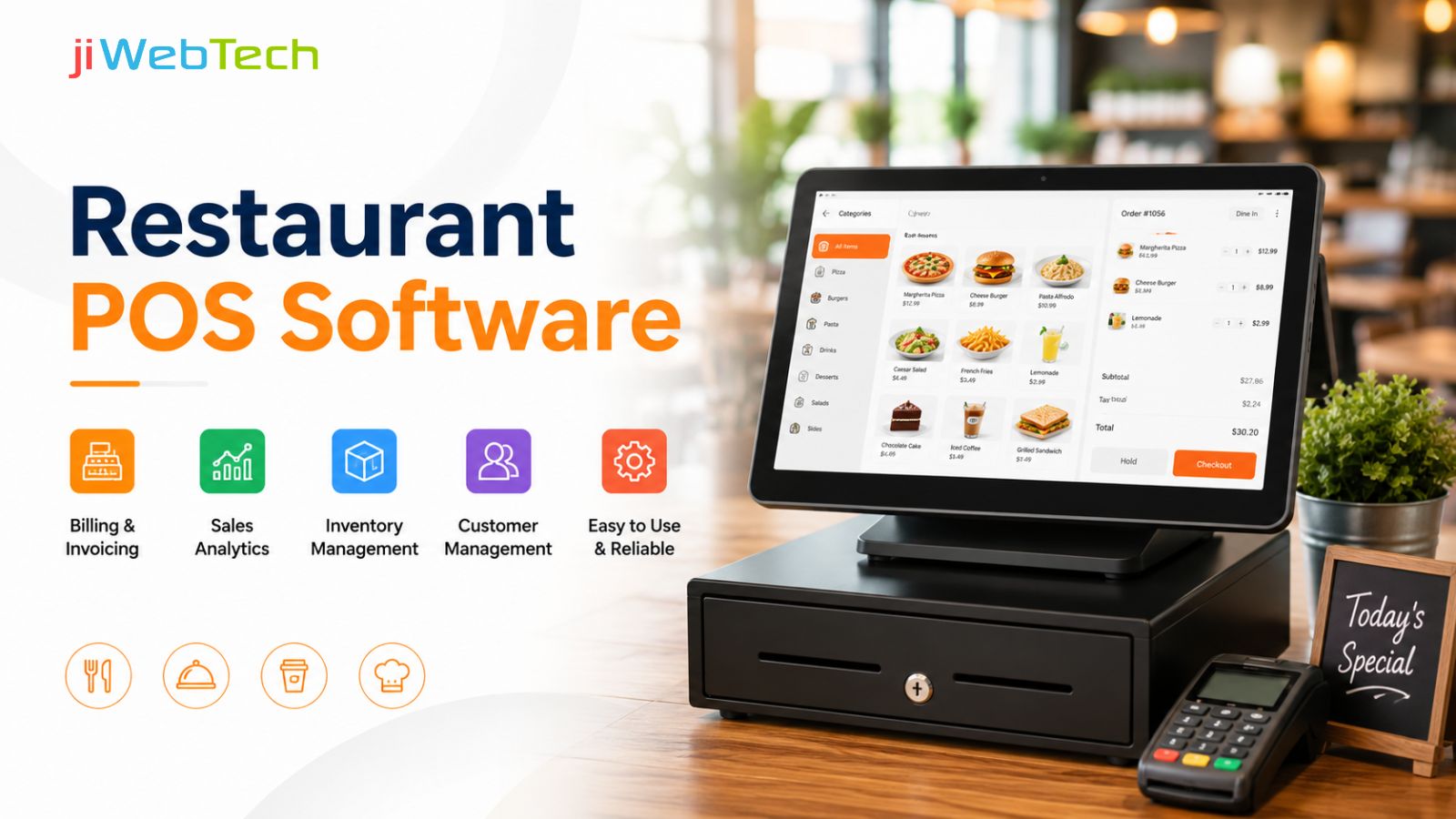
The restaurant industry has become more competitive than ever before. Customers expect fast service, multiple payment options, personalized experiences, and seamless online ordering. Managing these expectations manually is nearly impossible, especially for restaurants that serve hundreds of customers every day.
This is where Restaurant POS (Point of Sale) Software plays a crucial role. A modern restaurant POS system is much more than a billing tool. It serves as the central hub for managing orders, tracking inventory, monitoring sales, handling customer loyalty programs, managing employees, and generating valuable business insights.
Whether you own a cafe, fine-dining restaurant, quick-service restaurant (QSR), food truck, bakery, cloud kitchen, or a multi-location restaurant chain, the right POS software can significantly improve efficiency while reducing operational costs.
In this guide, we will explore the major benefits of restaurant POS software, essential features every solution should include, and why choosing the right technology partner can transform your restaurant operations.
Key Takeaways
- Restaurant POS software simplifies order management, billing, inventory tracking, and payment processing from a single platform.
- A modern POS system improves operational efficiency, reduces human errors, and enhances customer satisfaction.
- Features like real-time reporting, online ordering integration, CRM, inventory management, and multi-location support help restaurants grow faster.
- Cloud-based POS solutions provide secure access to business data from anywhere while ensuring automatic backups and software updates.
- Investing in a scalable restaurant POS system helps businesses increase profitability, streamline operations, and make data-driven decisions.
Top Benefits of Restaurant POS Software for Modern Restaurants
Restaurant POS software has become the backbone of successful restaurants by automating daily operations and providing valuable business insights. Beyond billing, it streamlines inventory management, customer engagement, employee scheduling, and sales reporting, allowing restaurant owners to increase efficiency, improve customer satisfaction, and maximize profitability in an increasingly competitive food service industry.
1. Faster Order Processing
A restaurant POS system enables servers to take orders digitally and send them directly to the kitchen. This eliminates handwritten tickets, reduces communication errors, and speeds up food preparation.
Faster order processing means shorter wait times, improved table turnover, and better customer satisfaction. Restaurants can efficiently manage busy hours while maintaining service quality, ensuring customers receive their meals quickly and accurately.
2. Improved Billing Accuracy
Manual billing often leads to pricing mistakes, incorrect discounts, and tax calculation errors. Restaurant POS software automatically calculates taxes, applies promotions, and generates accurate invoices.
This minimizes billing disputes, improves financial accuracy, and builds customer trust. Automated billing also reduces checkout time, allowing staff to serve more customers efficiently during peak business hours.
3. Real-Time Inventory Management
Inventory management is one of the biggest challenges in restaurant operations. A POS system automatically deducts ingredients whenever an order is placed, providing real-time stock visibility.
Restaurant owners can monitor inventory levels, reduce food waste, prevent stock shortages, and optimize purchasing decisions. Accurate inventory tracking also helps control costs and improve overall profitability.
4. Better Customer Experience
Modern POS software stores customer preferences, order history, birthdays, and loyalty information. This enables restaurants to provide personalized recommendations and targeted offers.
Customers appreciate faster service, customized experiences, and loyalty rewards, leading to increased repeat visits, stronger customer relationships, and improved brand loyalty.
5. Multiple Payment Options
Today's customers expect flexible payment methods. Restaurant POS systems support cash, debit cards, credit cards, digital wallets, QR payments, and contactless transactions.
Offering multiple payment choices enhances convenience, reduces checkout delays, and improves customer satisfaction while ensuring secure and reliable payment processing.
6. Detailed Business Analytics
Restaurant POS software generates comprehensive reports on daily sales, best-selling menu items, peak business hours, customer behavior, and employee performance.
These insights help restaurant owners make informed decisions, optimize menus, improve staffing schedules, and identify opportunities to increase revenue.
7. Employee Performance Monitoring
Restaurant managers can track employee attendance, working hours, sales performance, and order accuracy using integrated POS tools.Performance reports help identify top performers, improve accountability, optimize workforce scheduling, and reduce unauthorized transactions or fraud.
8. Online Ordering Integration
Modern restaurants increasingly rely on online orders and food delivery services. Restaurant POS software integrates with websites, mobile apps, and third-party delivery platforms. Orders automatically appear in the POS and kitchen display system, reducing manual entry errors while ensuring smooth order fulfillment.
9. Better Table Management
POS software allows restaurants to manage reservations, seating arrangements, and table availability in real time. Efficient table management reduces customer waiting times, improves dining experiences, and increases restaurant capacity during busy hours.
10. Increased Revenue and Profitability
By combining automation, inventory optimization, customer retention, analytics, and operational efficiency, restaurant POS software directly contributes to higher profits. Restaurant owners can reduce costs, minimize waste, improve service quality, and maximize every revenue opportunity while scaling their business more effectively.
Features Every Restaurant POS Software Should Have
An ideal restaurant POS software should do far more than process payments. It should simplify every aspect of restaurant management - from order taking and inventory tracking to customer engagement, employee management, analytics, and online ordering. Below are the essential features every modern restaurant POS solution should include for long-term business success.
Feature | Description | Business Benefit |
Order Management | Manage dine-in, takeaway, delivery, and online orders from a single dashboard. | Faster order processing and fewer mistakes. |
Billing & Invoicing | Automatically calculate taxes, discounts, and generate invoices. | Accurate billing and quicker checkout. |
Inventory Management | Track ingredients, stock levels, and purchase orders in real time. | Reduce food waste and prevent stock shortages. |
Kitchen Display System (KDS) | Send orders digitally to kitchen staff instantly. | Faster food preparation and improved communication. |
Menu Management | Update menu items, pricing, combos, and availability instantly. | Easy menu customization and better customer service. |
Customer Relationship Management (CRM) | Store customer information, order history, and preferences. | Personalized experiences and increased loyalty. |
Loyalty & Rewards Program | Offer points, coupons, and membership benefits. | Higher customer retention and repeat business. |
Employee Management | Track attendance, shifts, permissions, and performance. | Improved workforce productivity and accountability. |
Sales & Business Reports | Generate detailed reports for sales, revenue, taxes, and trends. | Better decision-making using real-time insights. |
Multi-Location Management | Manage multiple restaurant branches from one dashboard. | Centralized operations and easier expansion. |
Online Ordering Integration | Connect websites, mobile apps, and delivery platforms. | Increased online sales and smoother order processing. |
Table Reservation & Management | Manage reservations and dining tables efficiently. | Better seating optimization and customer satisfaction. |
Cloud-Based Access | Access restaurant data securely from anywhere. | Remote business management and automatic backups. |
Payment Gateway Integration | Accept cards, UPI, wallets, and contactless payments. | Flexible payment options for customers. |
Conclusion
The restaurant industry is evolving rapidly, and technology has become essential for delivering exceptional customer experiences while maintaining operational efficiency. A powerful Restaurant POS software solution enables restaurants to automate billing, streamline order management, optimize inventory, improve employee productivity, and gain valuable business insights through real-time analytics.
Whether you operate a small cafe, cloud kitchen, food truck, fine-dining restaurant, or a large restaurant chain, investing in the right POS system can significantly enhance profitability and support long-term growth.
At jiWebTech, we specialize in developing secure, scalable, and feature-rich Restaurant POS Software tailored to the unique needs of food businesses. Our custom solutions integrate seamlessly with payment gateways, online ordering platforms, inventory systems, customer loyalty programs, and cloud infrastructure to help restaurants operate more efficiently. From startups to enterprise restaurant chains, jiWebTech delivers innovative POS solutions that empower businesses to improve customer satisfaction, streamline daily operations, and stay ahead in today's competitive hospitality industry.
Frequently Asked Questions
1. What is Restaurant POS software?
Restaurant POS software is a digital solution that helps restaurants manage billing, orders, payments, inventory, employees, customer data, and business reports from a centralized platform.
2. Why does a restaurant need POS software?
POS software improves operational efficiency, reduces billing errors, speeds up order processing, tracks inventory, manages employees, and provides real-time insights that help increase profitability.
3. Can Restaurant POS software support online food ordering?
Yes. Most modern POS systems integrate with restaurant websites, mobile apps, and third-party delivery platforms, allowing restaurants to manage all online and offline orders from one system.
4. Is cloud-based Restaurant POS software better than traditional POS?
Cloud-based POS systems offer remote access, automatic updates, secure backups, real-time reporting, and easier scalability, making them more flexible than traditional on-premise systems.
5. What types of restaurants can use POS software?
Restaurant POS software is suitable for cafes, bakeries, quick-service restaurants (QSRs), food trucks, cloud kitchens, bars, fine-dining restaurants, cafeterias, and multi-location restaurant chains.
6. Can Restaurant POS software help manage inventory?
Yes. Restaurant POS systems automatically track ingredient usage, monitor stock levels, generate low-stock alerts, and help reduce food waste through accurate inventory management.
7. How can jiWebTech help develop custom Restaurant POS software?
jiWebTech develops customized Restaurant POS solutions with features such as billing, inventory management, CRM, online ordering integration, payment gateway support, analytics, cloud access, employee management, and multi-location capabilities to meet the specific requirements of restaurants of all sizes.